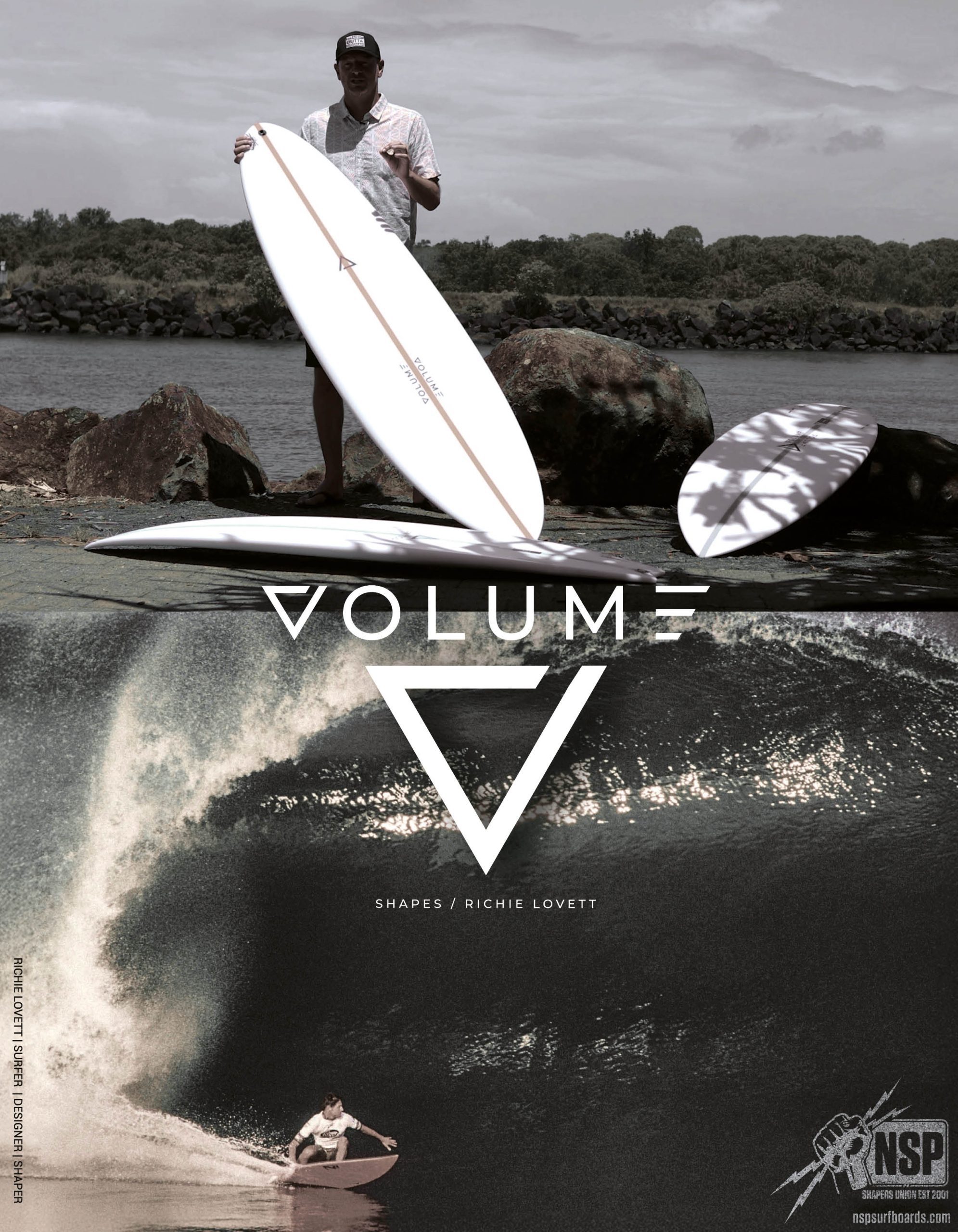
Richie Lovett NSP x Volume Shapes, a design philosophy centred on performance through accessibility
From overcoming career-ending adversity to redefining what everyday surfers need from their equipment, Richie Lovett has built a design philosophy centred on performance through accessibility. In this interview, he discusses how his personal journey shaped the NSP x Volume collaboration, the thinking behind the range, and why functional, user-friendly surfboards are the future.
2 years after your first victory on the CT at Lowers, a cancer diagnosis ended your pro career and you had to learn to surf all over again at 33. Your board choices at the time – longboard, midlengths, hybrids, SUP – changed your perception of surfing. How much of that experience translates into the NSP x Volume designs?
That whole experience has moulded the Volume Shapes range. In 2006 I went from being one of the worlds most elite surfers, to being physically handicapped with a totally new hip joint and femur. That required some pretty significant adjustments to my boards. No more high-performance shortboards with skinny noses… I started exploring ways to get the most out of my surf time through my boards. I started to understand all different types of rockers, outlines and how they can actually assist with speed generation, from there it was about exploring manoeuvrability and response. My design theory is based around riding the most amount of foam in a functional shape that allows you to maximise your own potential. The models that I’ve created with NSP are essentially the boards I ride on a daily basis…
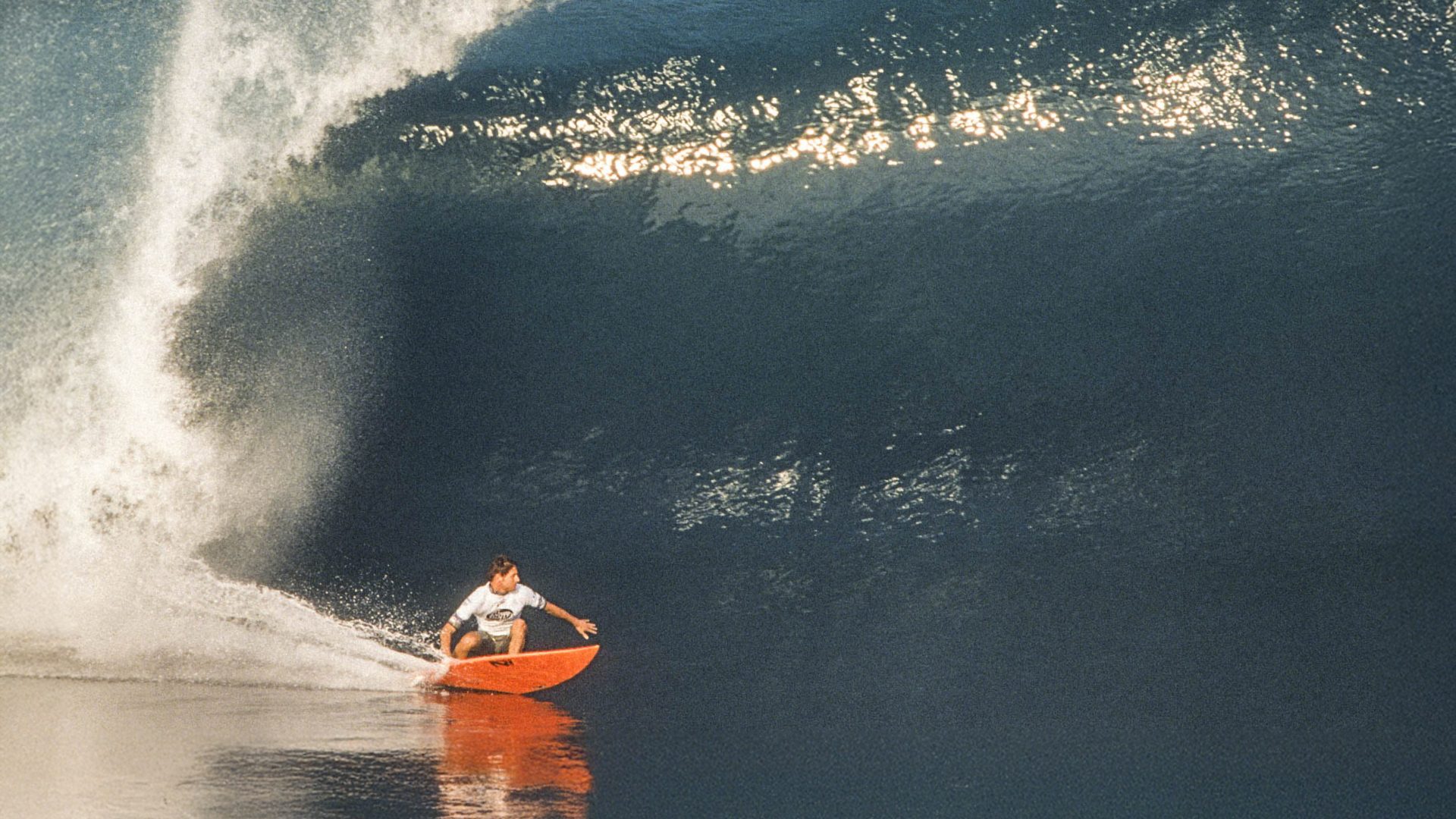
Before you actually moved foam, you started to mess around with the AKU shaping software. Do you consider yourself more of a designer than a craftsperson?
A designer for sure… All my designs are generated through the shaping software and I believe it’s the most efficient and accurate way to refine and make incremental adjustments. I love the shaping element, and the creative process that happens when you run gauze over the rails, plane down the stringer and finish the board off for glassing. I’m detailed and pedantic, and I take my time with every board I shape until I’m satisfied it hits the mark.
In 2020, you started your own brand, Volume Shapes. What are the key lessons you learned about the surfboard market in that short period?
It’s about not over complicating the range, and offering solutions to certain parts of the market. For me that’s mostly the 30 to 60 demographic who just want to get the best out of their surf time. My major focus is on function, stability and making surfing as easy as possible whilst still offering a high-level of performance from your board. The surfboard market is as interesting as it is competitive, and the growth of Volume Shapes has been organic and built through trust and surfers having a great experience with the product and sharing that experience with other surfers. Now, having partnered with NSP, and being able to cast the net wider into other markets, provides the opportunity for further growth. As a designer/shaper, the satisfaction comes from the positive energy transfer when a surfer has a great experience on your boards, the NSP Shapers Union has facilitated that and it makes me stoked. I’ve also learnt the importance of listening to feedback from the retailers and your customers… Give the people what they want. Trusted designs built with proven technology.
Volume Shapes works exclusively with retailers, while NSP x Volume will be both available in retail and D2C channels, offering global visibility. Is this hybrid distribution system the future of the surfboard business?
Well for me and Volume Shapes, definitely. I’m not a huge scale operator, my local setup has limited scope outside of doing premium custom work and short wholesale runs, so tapping into NSP’s global network makes total sense for me. I can focus on the designs and making the best product I can, while NSP takes care of the production and distribution. This also allows retail and DTC customers access to stock at all times which is super important.
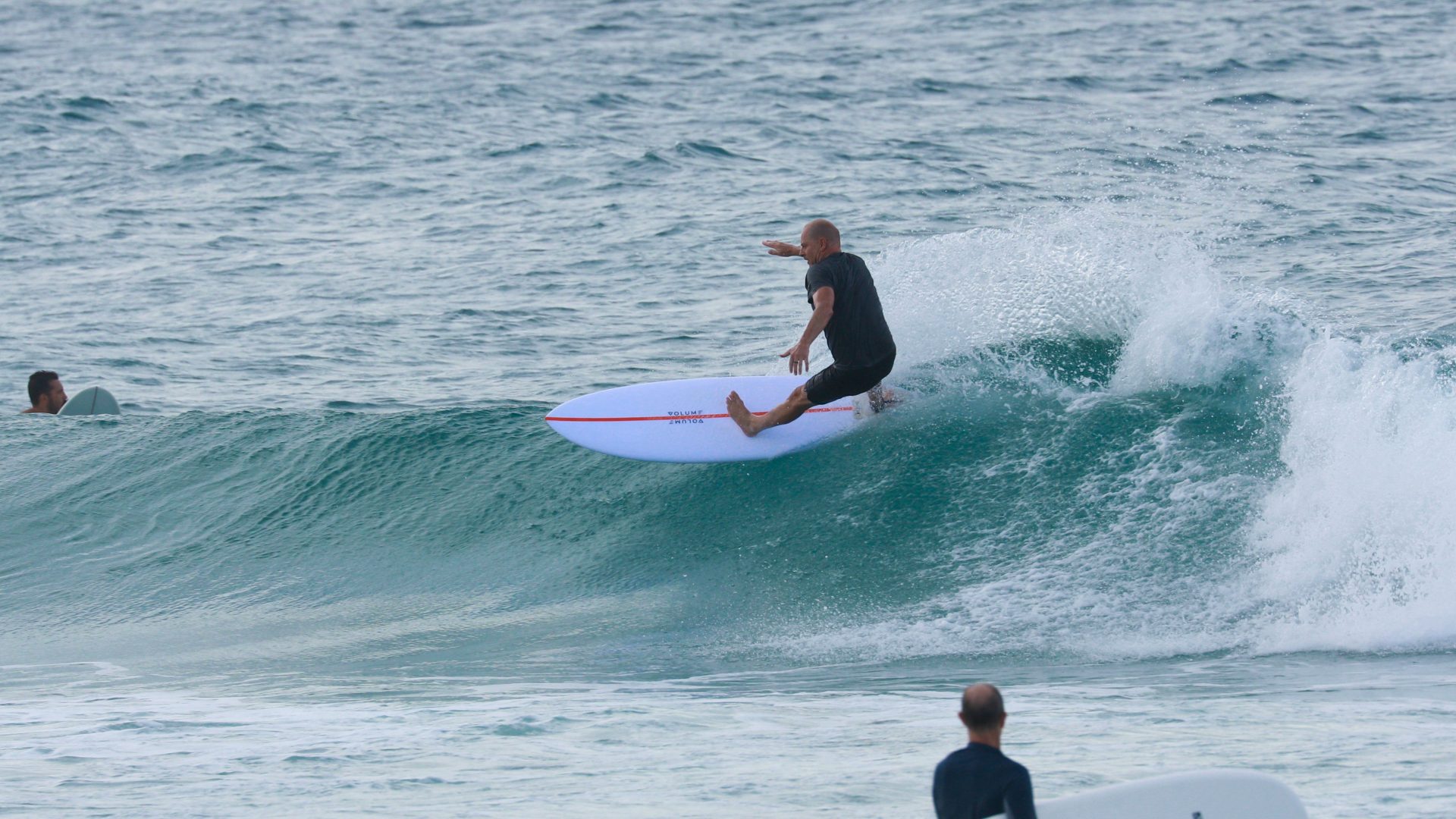
For your own brand, you use traditional PU in Australia and EPS/Epoxy in offshore facilities. The NSP x Volume Range uses their exclusive CSE & HDT construction. Can you tell us more about the construction options? What are the pros (and cons?) and which surfers they are made for…?
Correct, most of my custom work here in Oz is traditional PU, we make a few EPS/Epoxy customs but they are typically more expensive. Most of the global surfboard brands are making their epoxy boards offshore, and many in the same facility as NSP. I’ve been in many Asian factories, and the Cobra factory in Thailand is arguably the best in the world.
CSE is a stringered epoxy build that blends the liveliness of EPS foam with the structural stability and dampening effects of a traditional timber stringer. These boards are machine cut and shaped from the file. Using the timber stringer makes it easy to control the flex while still offering an exciting and responsive feel, and the added weight and buoyancy advantages of EPS. For those reasons these boards are great for everyday surfers in waves most of us surf on a daily basis, i.e. knee to overhead waves, beachies, point breaks, soft reef breaks… Also the EPS/Epoxy build is my preferred choice for wavepools because the boards sit a little higher in the water.
HDT is something different, these boards utilise a moulded EPS core that mirrors the shape file combined with a hard outer shell that’s fused to the core using a vacuum bagging process. The result is a really tough board that can take some rough treatment. Again, super relevant for surfers progressing in the wave pools, travelling surfers, tradies and surfers who are super hard on their equipment.
You joined some big names within NSP’s Shapers Union range. What were the requests from NSP? (customer profile, design specs, etc.)
Essentially, I think the Volume Shapes range sits well within the NSP offering. We also share a common customer profile, so the partnership and timing to join the Shaper Union just made sense. Functional designs, with credibility behind them, offered at a decent price is what we discussed and agreed would be the goal.
My years on the World Tour, time working with some of the biggest surfboard and hardware companies over the years, and more recently sitting on the WSL commentary team, has helped build an organic profile for me and the brand. I guess those markers were also picked up by NSP during our initial discussions.
The decisions around the model assortment is also an important part of the process. I prefer to work collaboratively on those elements rather than simply handing over designs and hoping for the best. I also understand NSP’s manufacturing model, I’ve been doing it for years so it was pretty easy to tap into their business. From my experience, if everyone is invested and works together, the process is much smoother and effective, and I feel like we’re working well together.
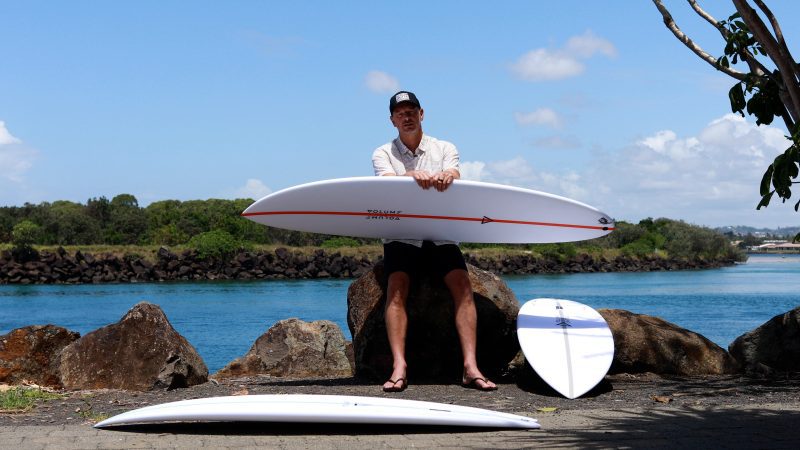
For the moment, the NSP x Volume range consists of 3 models (Midlength, Hybrid, and Fish). Can you briefly take us through the 3 boards? And are those exclusive designs for NSP?
The Midlength is a solution for aging surfers wanting to stay competitive in a line-up, and who still want the flow and feelings that come with drawing clean lines, effortless speed and long carving cutbacks. It’s a board that will motivate you to surf when the waves are small, and it will comfortably handle overhead waves as well. For a longer board it’s surprising just how easy this board turns and responds.
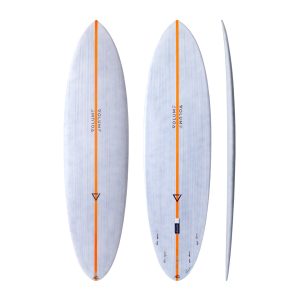
The Hybrid X is aptly named, and is like riding two boards in one. Broad upfront for easy paddling and stability, and a performance style tail that lets you turn nice and tight in the pocket. This model has such broad appeal and will hold in nicely when the waves have more juice. Fast, responsive and predictable… It’s really hard going back to a narrow nose shortboard after riding the Hybrid X, it just makes surfing easy.
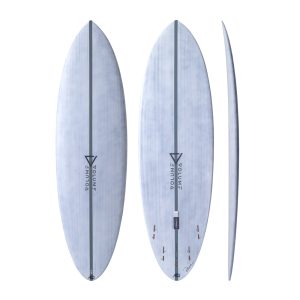
The Fish is more of an everyday performance style fish shape with a super smooth rocker, generous planshape and enough buoyancy to get you accelerating quickly from take off. Designed to feel predictable underfoot, with an easy flowing feel from rail-to rail. The tail features a flyer positioned just behind the side fins to elevate the board’s performance. This creates a narrower tail providing more control and bite in bigger, steeper waves. This one is kind of a one-board-wonder!
Any more designs to come in the near future? I’m super keen to keep adding to the Volume range, but any new inclusion needs to fill a gap or need in the market and the broader NSP range. There’s no point introducing a board that’s competing directly with another model, so it needs to be different enough to offer a new experience for the rider. I’m also a believer in keeping a tight range and sticking with models that I have refined over time and I know work really well. That being said, like most designers and shapers, we’re always tinkering, refining and making the models better. Stay tuned…