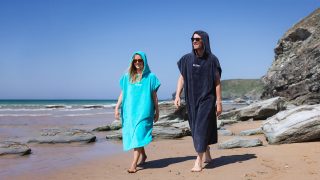


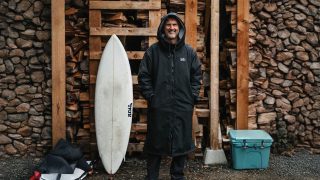

Surf Robes and Ponchos 2026 Retail Buyer’s Guide
Not all superheroes wear capes, but we – watersports lovers – sure do. The surf poncho & changing robe market has reached maturity and demands some adjustments for retailers as the product power couple split, leaning towards different directions. By David Bianic.
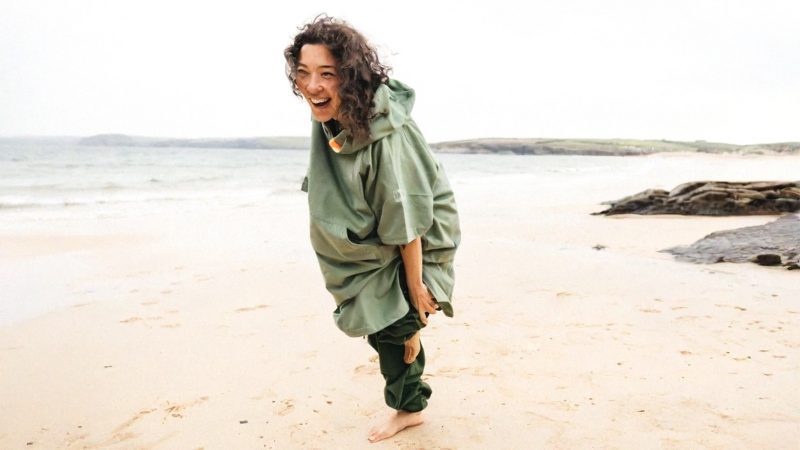
Conveniently, our Retail Buyer’s Guides have been gathering up the two parent designs – ponchos & changing robes, as they were both born out of mere changing purposes among watersports enthusiasts. Yet, as we come at a crossroads’ stage of the market dynamics, they only have a similar silhouette as a common denominator. As we analyse the 2026 retail landscape, the strategic tension between high-performance weather protection and traditional comfort garments has created two subtly different product categories.
A regional split is also being seen across the Old Continent; while technical robes dominate the wind-swept shores of Northern Europe, the towelling poncho remains the primary driver in warmer climates. “In southern Europe, surf ponchos remain dominant compared to changing robes,” explains Rémi Chaussemiche, Marketing Director, After Essentials, noting that while there is “demand for changing robes in northern Europe, but sales wise the surf ponchos are still performing better”.
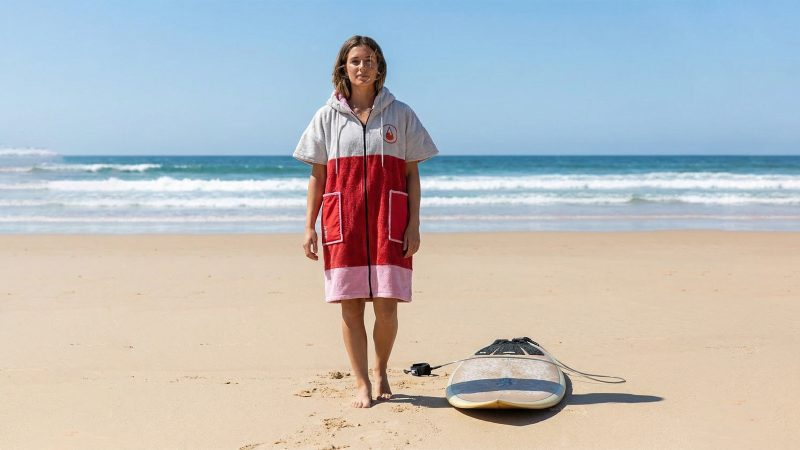
Data points the traditional old school poncho is far from obsolescence, particularly for brands that have mastered the lifestyle segment. “2025 was another top-selling year for us, with around 80,000 surf ponchos sold,” reports Carsten Raphael, CEO, Wave Hawaii.
Ponchos and Robes mirror two different customer habits, as the first one is often considered as a seasonal accessory, while the latter is a “year-round technical investment,” according to Mellow Sea. They argue that the modern changing robe “is a technical parka that replaces the classic parka, offering much better value for money for the consumer.”
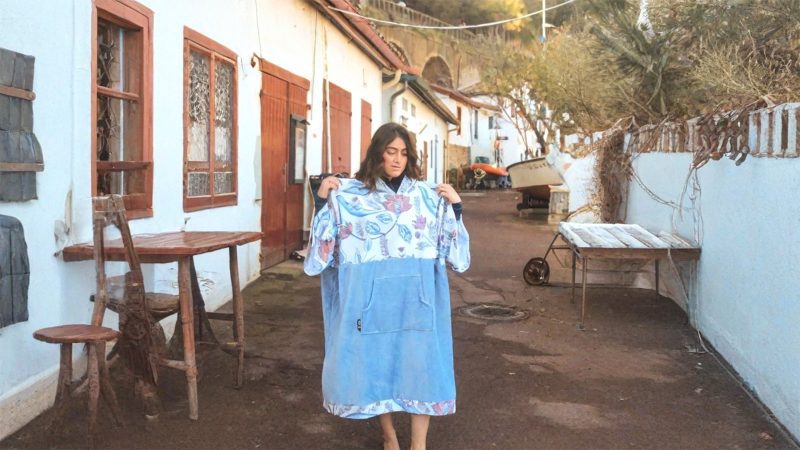
Brand Positioning: Core-to-Mainstream ratio
In an era where changing robes are becoming ubiquitous in urban environments, maintaining brand “soul” is critical against market dilution. “We bridge the gap by staying true to our surf roots while offering premium quality that appeals to everyone,” says JB Caste, CEO, ALL-IN, defining their position as “Technical Lifestyle.” This strategy ensures that the product remains a “core” piece of equipment for the avid surfer while staying accessible to the casual beachgoer. Segmentation has become the primary tool for managing this mainstream expansion.
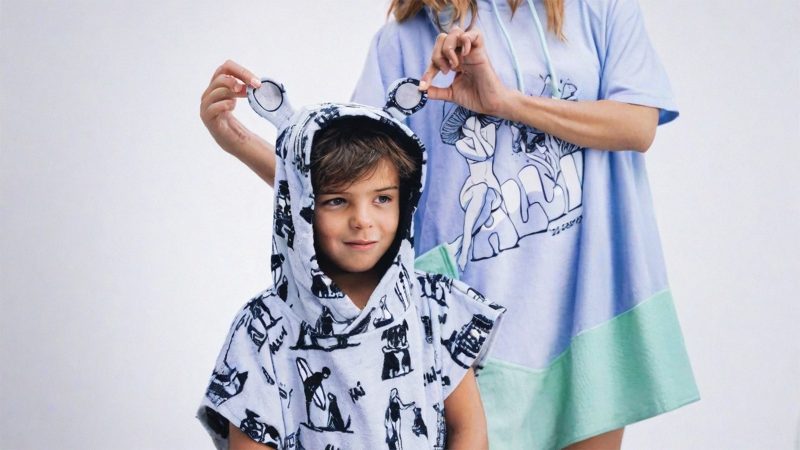
Thus, After Essentials has pioneered a “Series” approach, similar to the skateboard industry, to maintain niche appeal. Their After Lab collection serves as a cornerstone of this strategy, featuring collaborations with former pro skateboarder and photographer Arto Saari and street artist Mambo.
Conversely, Saint Jacques Wetsuits has achieved differentiation through a rejection of mainstream graphic trends in favor of “French elegance.” By avoiding the “psych motifs” prevalent in mass-market offerings, the brand maintains its premium status, says Stan Bresson. “We are not looking to make the poncho an urban fashion product or a general lifestyle item.”
For brands like Nomadix, multi-functionality is key to capturing the “van life” and “outdoor enthusiast” markets without alienating the core user. “Our changing poncho is built for water activities, but its appeal naturally extends beyond core users because it is practical, easy to wear, and useful anywhere,” says Nate Clark, Director of Wholesale. This broad utility naturally leads to a more diverse demographic of users, particularly among women and families.
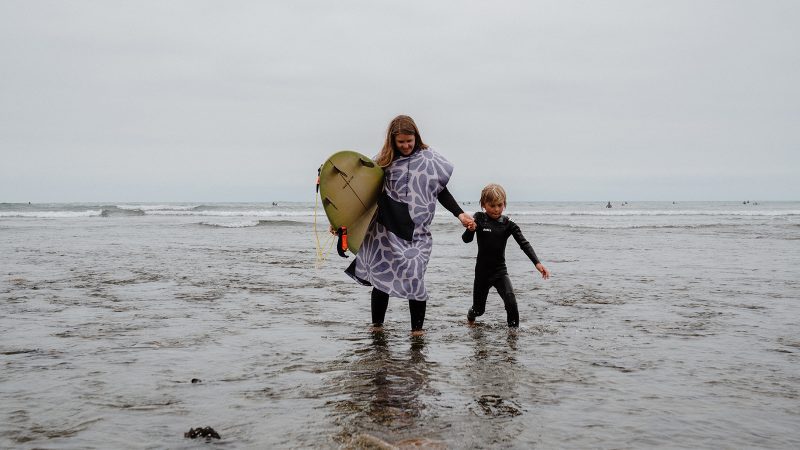
Customer profiles: Gender segmentation and “Grom” surge
The 2026 market is characterised by a significant blurring of gendered lines, with most brands reporting a 60/40 female-to-male split. “For our waterproof robes, it’s about 60/40 women to men, as our robes are so soft and comfortable it is understandable we particularly appeal to women who value that,” notes Catherine Morris, Commercial Director, Red Equipment.
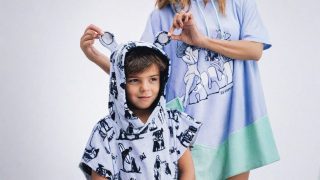
The “grom” market has simultaneously emerged as a high-stakes segment for long-term brand loyalty. “Kids love ponchos, they do several sessions a day… so poncho is a must have for them,” says Rémi Chaussemiche, After Essentials. Brands are now offering the same technical specifications for children as they do for adults, a strategy Mellow Sea is leaning into with their 2026 launch of the children’s Dry Stop Parka.
This “family beach day” spend is a critical lever for retail growth. “Families who equip their children often become loyal long-term customers – it’s a real driver of loyalty,” mentions Stan Bresson, President, Saint Jacques Wetsuits.
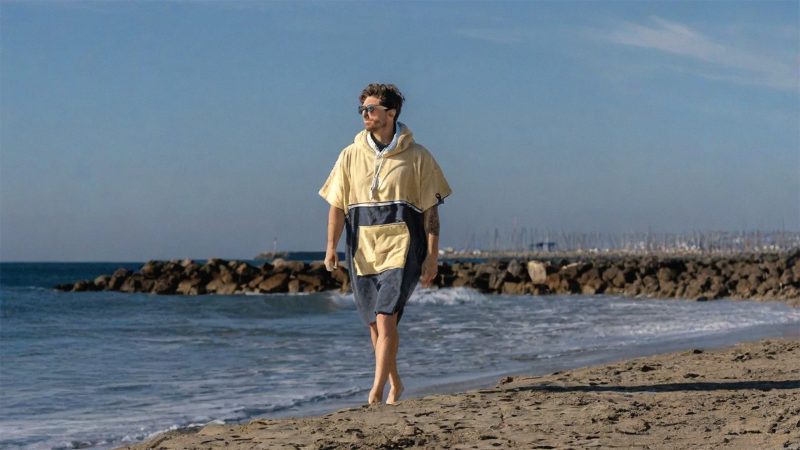
By providing gear that “keeps them warm and comfortable after being in the water,” according to Jimmy Pinfield, Representative for Robie, brands are cementing emotional connections with parents. JB Caste, ALL-IN, agrees, stating that offering sizes “from 1 to 15 years old” ensures that “the ‘ALL-IN soul’ starts from the youngest age.”
This focus on the next generation ensures that “those who have been embracing the changing ponchos for years, still use them as young adults,” as points out Rémi Chaussemiche at After Essentials.
2026 Poncho Innovations: Materials & Silhouettes
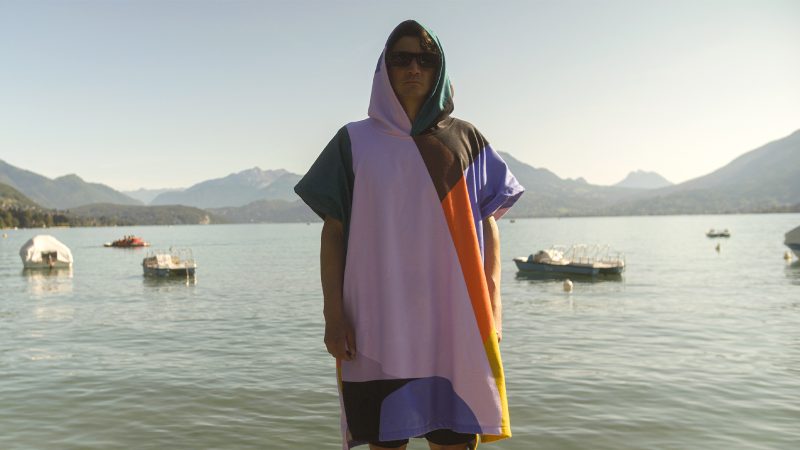
The 2026 poncho collections seem to be defined by a move toward 100% organic cotton and high-performance packability. “This year is all about texture and tone,” notes Jimmy Pinfield, Representative for Robie, highlighting their focus on “premium, plastic-free Turkish cotton.” This material focus is echoed by Meredith Cole, Marketing Manager, Slowtide, who emphasises their “Oeko-Tex Certified Poncho” and the use of “plush 100% winter-weight cotton” to provide ultimate comfort.
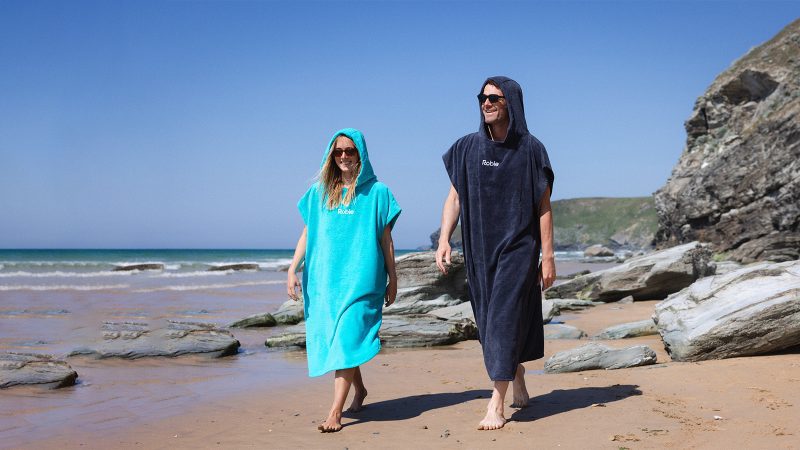
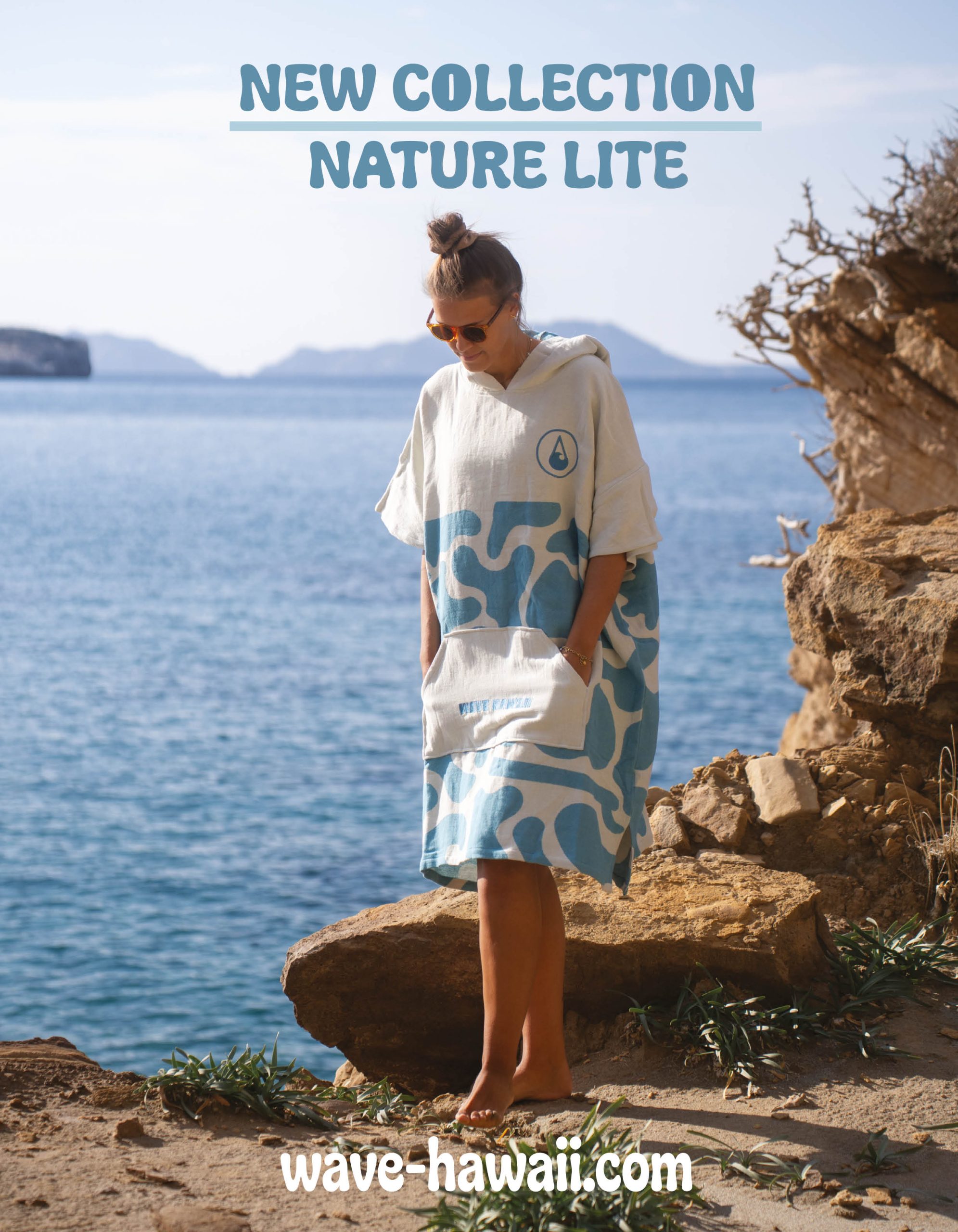
Innovation in silhouettes, such as the V-shape and the Full-Zip Towel Robe, is also driving sales. “The headline for this season is the evolution of our towel range, heavily influenced by the massive success of the Full-Zip Towel Robe,” says Dryrobe, noting it features a “high-quality YKK® zip for effortless changing.” Meanwhile, Wave Hawaii has introduced NatureLite, a “smooth cotton fabric that is super fluffy, has an extremely small pack size, weighs little, and dries quickly,” according to CEO Carsten Raphael. These advancements cater to the “packability” trend, expanding the product’s utility beyond the shoreline to global travel.
“Our new 2026 Towel Robes feature two major functional upgrades: integrated pull cords on the hood […] and inbuilt pockets,” adds Dryrobe, highlighting the 400gsm GOTS-certified organic cotton used in their construction. This focus on technical utility is mirrored by Red Equipment, whose “Quick Dry Microfibre” is predicted to be a major growth driver.
Changing Robes: The advent of the weatherproof parka
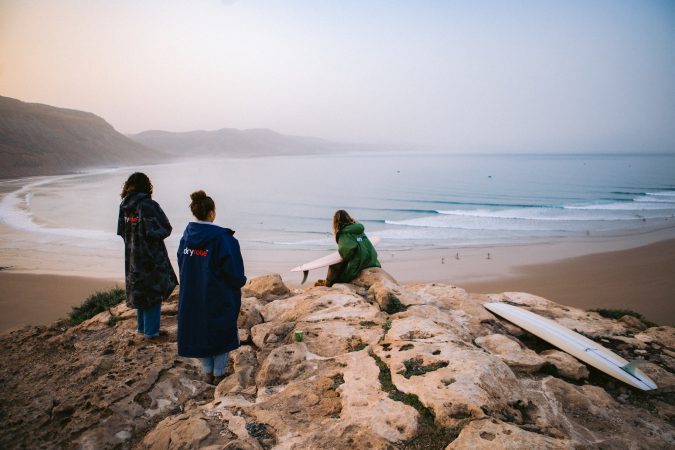
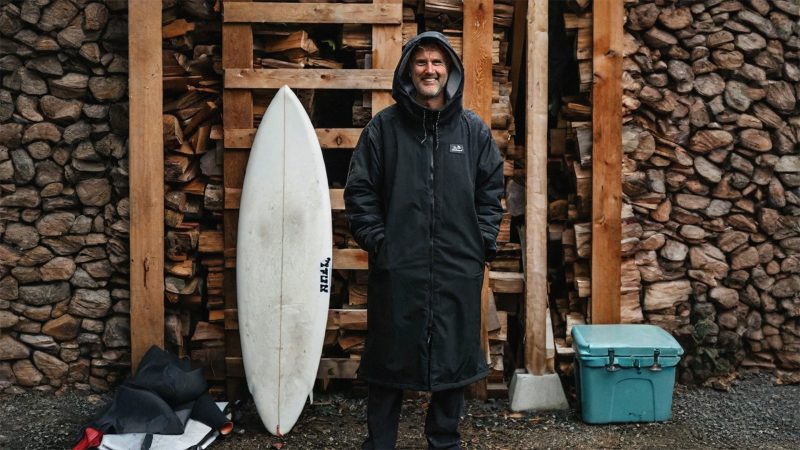
The “Technical Robe” has evolved into a high-performance equipment piece that rivals elite outerwear. Leading this charge is the Dryrobe® Nexus, with an “industry-leading 30,000mm waterproof ripstop outer,” the model is designed to bridge “the gap between shoreline performance and urban utility.” This level of specification allows retailers to command premium prices, as the product is positioned as a life-long tool for “the refined adventurer who demands elite protection everywhere,” according to Dryrobe®. Not far behind is the All-Weather Parka from Slowtide, which offers a “20,000 waterproof rating / 10,000g breathability” and a “PFAS-Free Waterproof Shell,” according to Meredith Cole.
Mellow Sea has also pushed technical boundaries with their “removable lining” innovation. The “3-in-1 modular system” features a “fleece interior covered with a removable waterproof lining, which can be easily removed and replaced depending on whether you are wet or not.”
The technical specs of 2026—including “YKK zippers,” “10,000 water column” recycled fabrics from Wave Hawaii, and “GOTS-certified” organic cotton—are the primary weapons against “cheap or low quality entrants,” according to Catherine Morris at Red Equipment.
Slowtide Surf Robes and Ponchos 2026 Preview
Retail Strategy
The 2026 market demands a departure from the “one-size-fits-all” inventory approach that has historically characterised the category. Carsten Raphael at Wave Hawaii warns that when retailers sell a “similar range of products,” the “shopping experience” is no longer exciting for consumers. Instead, the advice from the frontline is “to mix it up” and blend core watersports products with casual lifestyle appeal.
According to Rémi Chaussemiche at After Essentials, retailers can avoid price wars with sports chain stores. A sentiment shared by Jimmy Pinfield for Robie, as the most successful shops will be those that “blend those two worlds [core and casual] rather than treating them separately”.
Brand Previews