Euroglass Surfboards 2026 Preview
Retail Buyers Guide: Surfboards 2026 Retail Buyer’s Guide
Brand: Euroglass
Interviewee: Brandon SANCHEZ, head of Marketing and operations
The latest market studies show a 25% growth in worldwide participation between 2018 and 2024? Does this translate in your sales pattern?
Yes, particularly in the post-COVID period, with a strong increase in demand between 2022 and 2023. People had a genuine need to return to outdoor activities and regain a sense of freedom after the disruptions caused by the pandemic. However, this momentum slowed down from 2024 onwards, as things returned to “normal” and were followed by several global events that naturally shifted people’s priorities. Leisure is no longer the primary focus for many.
Can you share the sales ratio between stock boards, custom orders, online D2C vs brick and mortar shops?
Our sales are split roughly 65% wholesale accounts and 35% retail (B2C). Within B2C, about 80% of sales come from stock boards, while custom orders represent around 20%.
How can we lure back the newcomers into hardboards while softboards are their go-to choice?
Many newcomers naturally aspire to ride a hardboard. While softboards remain fun and increasingly high-performing, hardboards still carry a much stronger image and identity within surfing culture. The traditional image of a surfer is still closely tied to a hardboard, and this perception is quickly adopted by beginners. After catching their first waves on softboards, they often want to move to the next step fairly quickly. Hybrid boards (EPS with soft tops) can serve as a transition, but they are often too technical in their shapes. That’s why we focus on more accessible hybrid designs, such as minimalibu-inspired shapes.
Which are the most sought after designs in 2026? (Mids, fish, grovelers, hi-perf, logs…)
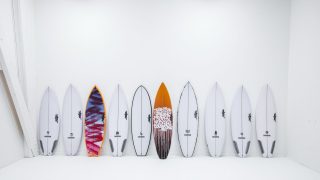
Mid-lengths and fish shapes seem to be leading the trend. Mid-lengths remain a staple, as they suit a wide range of surfers and conditions. Fish boards are also very popular, especially when paired with aesthetically appealing finishes like tinted glass jobs.
In comparison, which designs tend to fall back?
Pure shortboards remain the most technical option and therefore cater to more advanced surfers. It’s not so much a decline, but rather a saturation—there are now so many variations and models that it can become confusing for consumers.
Construction wise, EPS/Epoxy+carbon is gaining momentum. Do you think the fancy tech constructions are all smoke and mirrors, and PU boards won’t disappear shortly?
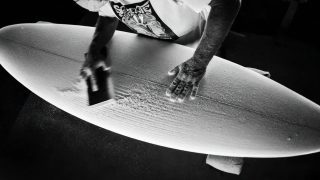
Carbon and EPS/carbon constructions are definitely trending. They are perceived as innovative and more durable. That said, PU boards are still very much present in the market. There are several reasons for this: their more accessible price point, and their unique feel in the water—particularly in terms of flex and glide. Some newer technologies are getting closer to replicating the PU feel while offering improved durability, but they are still relatively new and more expensive. They won’t replace PU overnight. For us, producing PU boards locally in France is also a strong quality guarantee that surfers understand and value.
Organic grown and eco-blanks are available for mass production nowadays: what is your take on those?
We’ve tested several brands, and our shaping team has found that they offer very similar qualities to traditional blanks. This is a positive development, as it allows us to work in the same way while using more environmentally friendly materials. Often, the ecological aspect tends to come with trade-offs (price, workflow, profitability), but in this case, we’re approaching a transition that is almost seamless—which is very encouraging.
Any tips for retailers trying to sort out their order sheets with more designs available than they can actually stock?
A key tip is to carefully choose your suppliers.Working with a manufacturer like us, capable of producing boards within two weeks, allows retailers to keep a focused in-store selection while still offering a much broader range through fast custom production.
Key Products:
Bradley — Lynx:
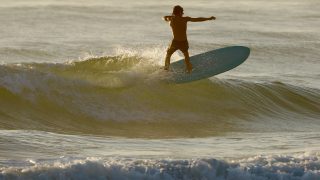
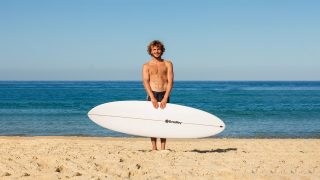
The Lynx is a refined mid-length designed to blend effortless glide with true responsiveness. Its generous outline ensures easy paddling and smooth wave entry, while the balanced rocker and refined tail allow for controlled, flowing turns. Versatile and intuitive, it suits a wide range of surfers looking for a board that bridges performance and accessibility.
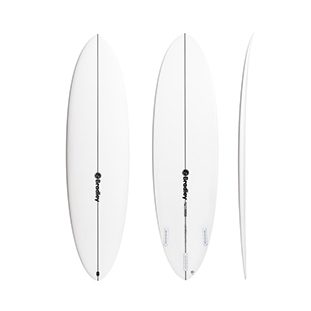
lynx
Grace — Demibu:
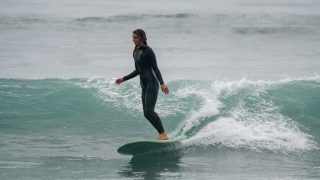
The Demibu is a modern take on the classic minimalibu, built for progression and pure enjoyment. Stable, forgiving, and easy to handle, it offers excellent paddling power and smooth take-offs. Its clean lines and balanced volume make it ideal for beginners and intermediates, while still delivering enough performance to keep improving session after session.
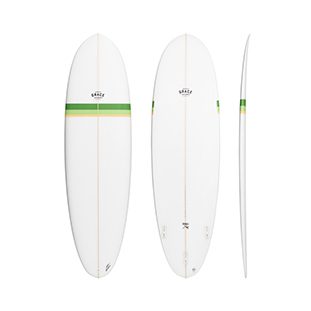
GRACE_DEMIBU33_3_
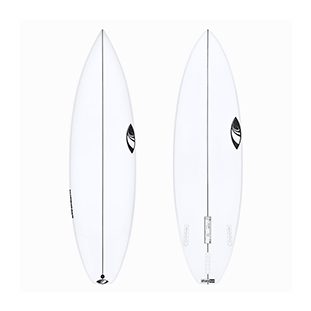
Sharpeye — Inferno 72:
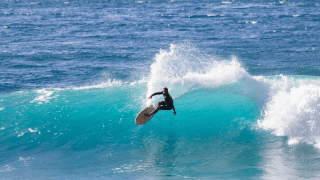
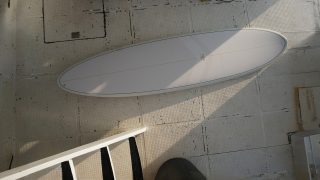
The Inferno 72 is a modern performance shortboard designed for everyday conditions. Built with a slightly more forgiving outline and added volume, it offers easy speed generation, smooth rail-to-rail transitions, and reliable control. Ideal for intermediate to advanced surfers, it excels in average waves, allowing riders to maintain performance without needing perfect conditions.
sharpeye_inferno72_allwhite
Brand Previews