













Snowboard Bindings F/W 2026/27 Retail Buyer’s Guide
As the snowboard industry heads into the 26/27 season, bindings are at the centre of a major market shift. Riders today are more discerning, curious, and informed. They are also far more willing to invest in products that elevate their days on snow. What they value is clear: comfort, responsiveness, reliability, and convenience—wrapped in a purposeful riding experience. Retailers must understand not only what riders want, but why. Ladies and gents, welcome to next winter’s Snowboard Bindings 26/27 Retail Buyers Guide, brought to you by Matthieu Perez.
IT’S HOT AND SELLS
Across the industry, brands confirm that riders are gravitating toward gear that reflects identity and performance rather than price consciousness alone. FLUX captures this sentiment precisely, stating that their customers are “leaning into high-performance gear and choosing products that reflect individuality and fit instead of simply chasing the lowest price”, says Kyosuke Ogata, Flux Brand Manager. It’s a shift that places craftsmanship, fit, and ride feel directly at the front of purchasing decisions. Snowboarders expect products refined down to the last detail. They notice every nuance: how a strap wraps, how a baseplate flexes, and how stable or lively a binding feels underfoot.

Convenience, however, is the second major pillar shaping behaviours. Basti Kuhn, Marketing Manager at Salomon, highlights, “Convenience is definitely a hot topic.” Brands face the challenge of delivering this convenience without compromising performance. Retailers must understand the motivations behind each rider preference.
Regional trends reinforce this optimism. Head reports strong demand across Japan, Europe, and North America, reflecting the ongoing strength of the snowboarding segment. Eva Knöpfle, Head Junior Marketing Manager for snowboards, explains that, “With more riders than ever investing in premium, high-performance gear, snowboarding continues to grow and inspire a new generation of enthusiasts.” This global uptick strengthens the entire category, fueling innovation and leading to products that provide higher margins for retailers. It also gives retailers confidence in stocking deeper, more varied binding assortments.
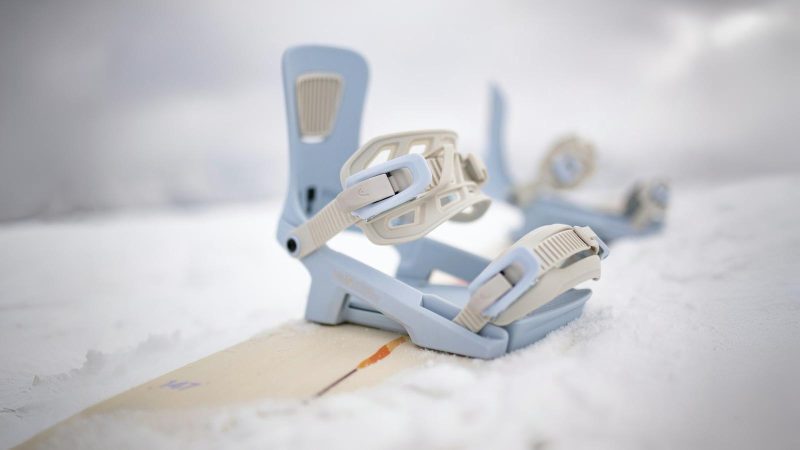
At the same time, riders show a pronounced interest in durability. Kyle Hansen Kahn, director of marketing at Karakoram, summarises it simply: “The market is experiencing a return to quality over quantity – riders want bindings that last multiple seasons rather than replacements every year.” Disposable equipment no longer aligns with rider expectations; longevity and sustainability are becoming vital purchase drivers.
The rise of fast-entry solutions is also shaping behaviour dramatically. At Bent Metal Binding Works, Paul Ferrel, Product Manager, notes that “fast-entry systems like Supermatic® and other speed-entry bindings are gaining serious traction – riders love the convenience, especially on busy resort days”. These fast-entry systems continue to use the traditional, two-strap binding design as their foundation due to its track record of providing exceptional control and adjustability. Bataleon’s Global Sales Director, Ruben Kiebert, sees similar momentum, and explains that “riders are increasingly willing to invest their hard-earned dollars in products that prioritise technology, comfort, and performance,” with a noticeable surge in interest for quick-entry options.
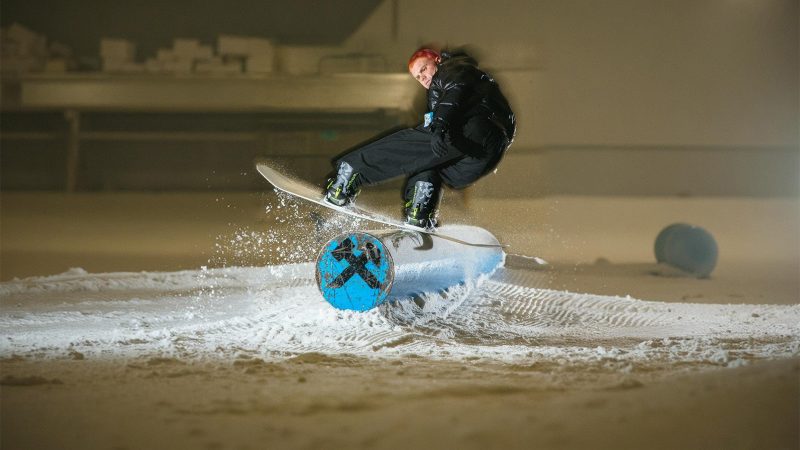
To ensure that every binding they create reflects the priorities of riders pushing progression, Rome brings a cultural approach. “Whether we’re creating team-driven video projects, introducing new binding technology, or crafting innovative board shapes and technology, we’ve shaped our focus to be the voice of youth-driven freestyle, which influences these projects and products from development to the consumer,” explains Ben Morse, Rome’s Brand Director.
Union Binding Company designs, develops, and manufactures every binding in its own dedicated factory – where only Union products are made. Claudio Distasi, EMEA Sales Manager illustrates, “This vertical structure allows us to stay agile and reliable, ensuring that riders and retailers get consistent product and service no matter what’s happening globally. We work hard to balance innovation and production speed while maintaining the quality and durability our riders expect.” Retailers who align their offerings with these expectations – while educating consumers on the subtle differences between products – are positioned to thrive.
WHAT SHAKES THE MARKET?
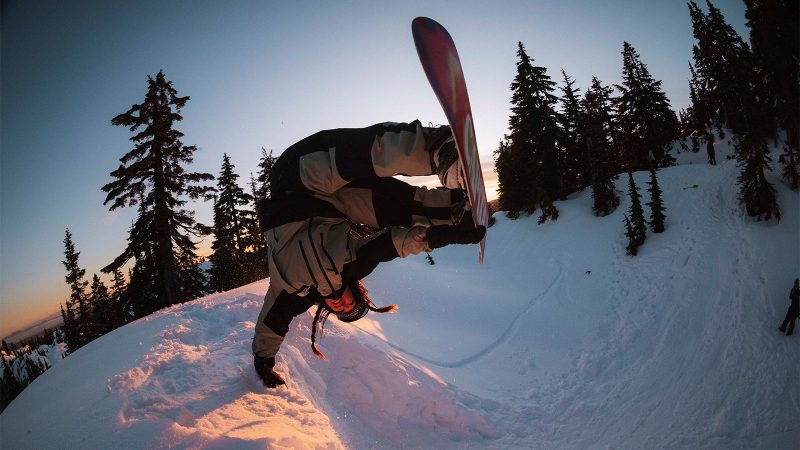
The 26/27 market is vibrant and competitive. It is also thoughtful, value-driven, and increasingly diversified. Riders have more options than ever, and retailers must guide them through this growing landscape. Burton captures the current landscape perfectly by explaining that “multiple platforms are now actively competing for rider attention and market share, from strap bindings to Step On® and hybrid systems”. Yet even amid this proliferation of technologies, Burton grounds its approach in a guiding principle unchanged for five decades: “For 50 years, everything we’ve done has started with one simple question: What’s best for the rider? And that won’t change in the next 50”.
Following the same type of engagement, Union identifies the major forces propelling sales. Distasi analyses, “Riders are increasingly looking for bindings that combine performance with convenience, which is driving growth in both high-performance strap bindings and step-in systems. Sustainability is becoming more important, with buyers paying closer attention to materials and brand practices.” Union’s insight into the continued importance of specialty retail is especially relevant. According to the brand, while direct-to-consumer channels expand, physical stores remain essential for fitting, education, and brand storytelling.
Environmental responsibility continues to influence both brand development and consumer interest. Salomon’s Mindful EDB binding concept is a clear example. Kuhn explains, “We’ve got a baseplate made with 20% recycled nylon, straps and pads using re-grinded footwear materials, and a glue-free pad setup to reduce chemicals. It’s a clean, durable design that skips the gimmicks and focuses on what matters”.
ThirtyTwo’s market perspective is defined by enthusiasm and momentum, built over three decades of creating rider-driven snowboarding boots, outerwear, and accessories. Following their 25/26 FASE® binding launch, Will Keegan, ThirtyTwo Boot and Bindings Designer, points out, “We experienced strong overall demand with great retailer buy-in and a strong consumer response”, demonstrating that the binding category still welcomes new energy when it comes from a brand with deep rooted snowboard culture.
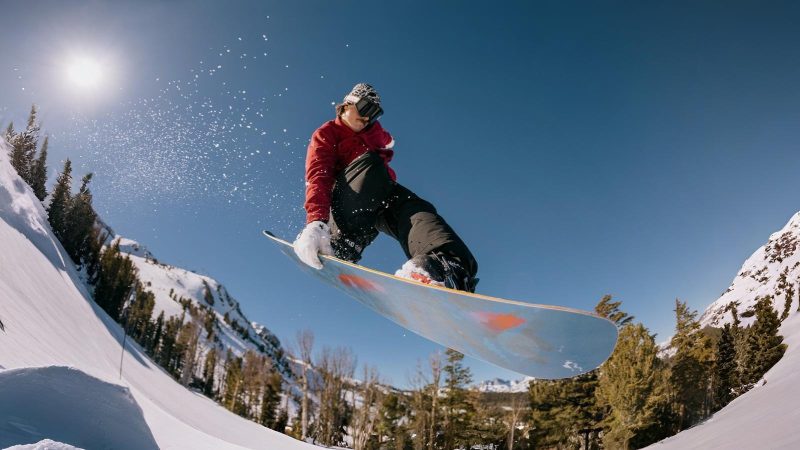
Like ThirtyTwo, another defining market story is the rise of the FASE® Fast Entry System for Jones Snowboards. Xavier Nidecker, Jones Brand Manager observes, “The Mercury FASE® has set a new benchmark – both in terms of sell-in and sell-through. Demand far exceeded our forecasts, and inventory is already sold out”, prompting Jones to expand the FASE® range to three models for 26/27.
Using the FASE® system in its binding range, Rome echoes this excitement and notes that the quick-entry category must blend convenience with true premium performance.” As new systems continue to span more riding styles and technologies are able to be licensed, the demand is sure to maintain its growth,” claims Morse.
Clew CTO Jakob Schneider states “More and more riders are moving from traditional bindings to step-in systems, and that trend plays right into our strengths. The goal is simple. Less time using ratchets and more time riding”. Operated from Germany, Clew has complete production control and acknowledges the accelerating demand for step-in systems and positions their bindings as intuitive, fast, and technologically robust.
Let’s not forget that more mechanical innovation is also entering the category. Bone Bindings introduces a new element of flexibility that allows riders to more freely express their creativity on the snow and in the air. Tim Jacobi, ‘Boner-In-Chief’, puts it simply, “The distinctive feature is a new tilting degree of freedom that lets your legs pivot with respect to the board.”
Not every development in the marketplace is for the better. Drake and Karakoram, for example, both note that increased tariffs, rising material costs, and logistical challenges are also shaping the market. Gian Luca Barbi, Marketing Specialist at Drake, notes, “In the current snowboard binding market, price competition is intense, with some consumers increasingly focused on value-driven and affordable products”. He continues, “At the same time, riders show a clear preference for fast-entry systems that enhance ease of use”.
Karakoram adds that uncertainty over tariffs encourages brands to adapt quickly, and the brand’s early deliveries reflect this adaptability. Hansen Kahn celebrates that “Our team really crushed it this year and we were able to get our biggest shipments out before the tariffs would have kicked in.” Yet he acknowledges that tariffs and geopolitics made the year a lot harder than it needed to be.
Nitro’s reflections spotlight another important reality: authenticity. The brand explains that staying true to snowboarding’s core values has helped Nitro evolve. “Dominik Fleissner, Product Manager for bindings recalls, “While Nitro was just one brand among many 20 years or so ago, we’re now being looked at differently: as one of the few truly authentic and independent brands, and as a market leader that stands for snowboarding and its values.” Commitment to identity and rider-focused design continues to resonate strongly in the market.
PIMP IT UP!
The momentum behind bindings that emphasise convenience was already strong, but according to Xavier Nidecker everything changed with the arrival of FASE®. As he puts it, “The 24/25 season saw the fast-entry binding segment continue to grow and solidify in the market, but the majority of riders still favored traditional two-strap bindings for their proven performance and the range of options. That all changed in the 25/26 season with the arrival of the FASE® System. This new ingredient technology will revolutionise the entire binding market.”
FASE®’s effect is immediately visible across product lines. Jones describes its flagship execution with clarity: “The Zenith FASE® represents the pinnacle of our collection. It features a new carbon-injected Fusion+ XR-C baseplate and AsymCore highback, along with premium impact cushioning and our super-responsive VertEx ankle strap, which delivers instant heel-to-toe edge response,” says Xavier Nidecker.
Rome highlights the system’s ability to soften and tune flex, allowing more playful or tweakable riding characteristics. As Morse explains, “The Nebula FASE® uses the same responsive XR chassis as the Jones Mercury FASE®, but it’s cradled with our ultra-cushioned D-FUSE impact pad.” He adds, “The softer AsymFlite highback and Sensi-Flex ankle strap pair well to enhance the tweak-friendly, easy-going flex of the binding.” What makes FASE® notable is its adaptability: whether stiff and reactive or soft and expressive, the platform can host both personalities.
ThirtyTwo uses FASE® to broaden accessibility, aiming to meet the needs of riders from entry-level to elite. As Keegan states, “We are making bindings for every rider that lives for days on the hill. This can be seen from our new affordably-priced Basin model all the way up to ThirtyTwo’s higher-end T32M XLT Carbon.” He details, “The binding features a stiff flex carbon fiber highback, with a nylon glass fiber baseplate offering response and connection to your board.” On the other end, the Basin offers a softer binding with a molded foam base plate for vibration dampening and increased board feel.
FASE® has also inspired new structural directions. Kiebert showcases Bataleon’s re-engineered platform, “Doubling down on our commitment to progression and innovation, we’ve developed the MonoFrame™ chassis. This all-new binding platform expands the Bataleon offering and integrates FASE® technology into the all-new Ghost Men’s and Women’s models.” He adds, “These bindings deliver top-tier performance with a seamless, one-piece feel—at a price point that puts innovation within reach.”
Supermatic® embodies the rise of the hybrid convenience platform. Santiago de Santa Catalina, Nidecker Bindings Product Manager, summarises, “The Supermatic® – the binding which changed the game for everyone – is now expanding across brands and customer bases worldwide, growing snowboarding by making riding better for everyone who uses it.” The system’s simplicity and appeal are clearly stated by Kuhn, “The Salomon XA Supermatic binding features the most proven convenience binding technology. Featuring a reclining Salomon Highback for easy entrance and release lever for easy exit.” The emphasis on familiarity combined with effortless operation continues to drive the Supermatic® category.
Innovation continues rapidly. De Santa Catalina frames it, “Innovation is in Nidecker’s DNA and we can’t let a collection go by without introducing some new tech and even some new binding models.” Updates include new materials, strap systems, baseplate constructions, and adjustability options, all focused on the convenience-first mindset Supermatic® pioneered.
Bent Metal Binding Works brought automatic entry to the lineup with the addition of Supermatic® Technology last season. Ferrel offers, “Together with our versatile two-strap line and the game-changing Supermatic® system, the brand now offers a complete spectrum of binding technology – so riders can choose the fit, feel, and function that matches their preference, style, and priorities.“
Step On® is more than a system; it has become a catalyst for engineering innovation across the market. Tommy Delago, Big Chief at Nitro, frames the current climate perfectly, “Convenience bindings are the talk of the season, and everyone wants a share of the action. While consumer behaviour is shifting towards more convenience in every aspect of life, brands and retailers see the sales potential and are positioning themselves. Partnering with Step On allows us to focus purely on product performance,” says Delago. “By working with a standardized boot–binding Interface, we can design a precisely shaped highback that guides the boot cleat instantly into position and combine it with our new Hyper foam to reduce chatter, absorb impacts, and return more energy—resulting in faster, more secure entry and a more responsive ride overall.” Next level.
Step On® continues to hold a uniquely strong position within that broader trend. The latest generation arrives with meaningful refinements at Burton: “For 26/27 we are introducing brand new Step On® Re:Flex baseplate & heelcups, the Step On® X binding gets another upgrade with the new Heel Grabber technology, creating a new level of connection between Heel Cup & Heel Hoop when the boot is engaged. Our Step On® EST® bindings will receive an update with the addition of Performance Tower components to the baseplate for easier entry plus greater response in heel turns,”.
Momentum builds across brands as well. Fleissner at Nitro states, “For the 26/27 season, we are introducing our new SPEEDWHEEL 3.0 buckles and ratchet straps. This update allows us to enhance durability and longevity…Even a tenth of a millimeter can make a difference in this part, helping us deliver an excellent closure.”
The ripple effect is visible across the industry. At Union, Distasi reports, “We launched the Union Step On® in January 2025, and the response exceeded our expectations. The first drop sold out quickly. We have a second wave of Atlas Step On® bindings hitting stores in fall 2025, and we are expanding the Step On® lineup with two new models for 26/27.”
The dual-entry segment is driven by simplicity and universality, which is why its advocates are so direct. When asked about demand for quick-entry systems, Louis Mander, SP Head of Marketing, answers, “Yes! They are the new norm!”
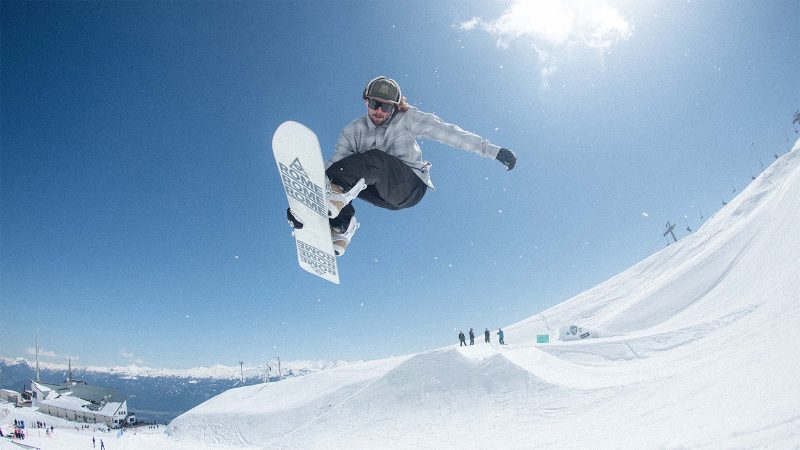
This ethos shapes dual-entry product development at Head. Knöpfle adds, “Our focus is on the new EX Series and the RX TEAM, both introducing key innovations in construction, comfort, and performance. The brand-new EX Series debuts with a completely reengineered platform, delivering superior heel hold, seamless boot integration, and optimal power transfer.” Dual entry is no longer seen only as a beginner-friendly solution – it is evolving into a reliable all-mountain option with growing technical depth. Reflecting this reality, SP clearly outlines its mission: “Make snowboarding more accessible. We design dual entry bindings for all price points to fit all rider’s needs.”
Some brands explore hybrid paths between classic straps and convenience systems. At Bent Metal, Ferrel introduces a new family of semi-automatic bindings: “We expand the offering with SPEED-IN Technology – a new semi-automatic category that bridges traditional two-strap bindings and full automation. When we say lightweight, we mean it. You’re not going to believe how lightweight they are till you get them in your hands.” To be tested at B2B on-snows this winter!
Clew continues its evolution with a major generational shift. Schneider says,“The Independence bindings represent a significant technological leap compared to all previous models. The main focus is on weight reduction and performance enhancement.”
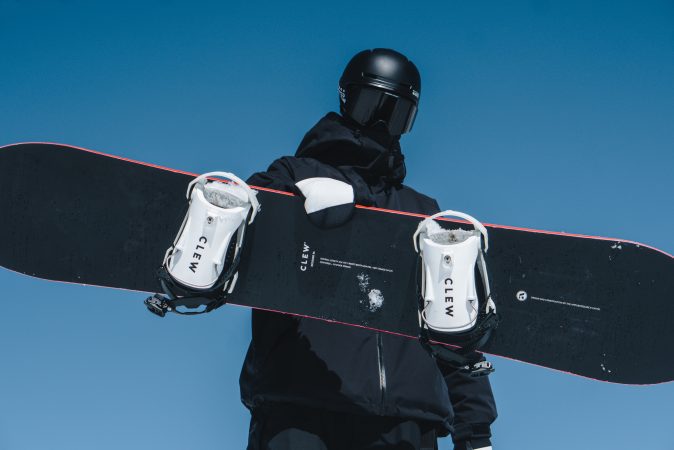
Drake sees opportunity in rising consumer expectations. “For the 26/27 season, we expect the fast-entry binding segment to lead growth, as riders increasingly demand convenience and speed without compromising performance,” Barbi says. He adds, “We’re already developing a new fast-entry binding system to meet the growing demand for quicker, more convenient setups – especially among younger and intermediate riders seeking comfort and efficiency.” These systems show that convenience is not a monolithic concept; it is emerging in multiple forms, each serving different rider needs.
Even with the surge in convenience systems, strap bindings remain essential. As Kuhn puts it, “Personally, I still think nothing beats a classic strap binding – especially if you’re looking for a strong connection to the board under your feet and don’t mind bending down. It’s all about finding the right balance between innovation and authenticity.” The evolution of two-strap bindings reflects that balance.
For instance, Union expands its traditional line with a strong technical update. “A key highlight is our all-new Neo model, featuring a unique three-piece baseplate construction that is exclusive to Union. The design features a mini disk, delivering true board flex and increased lateral freedom for a more natural ride feel”, shares Distasi.
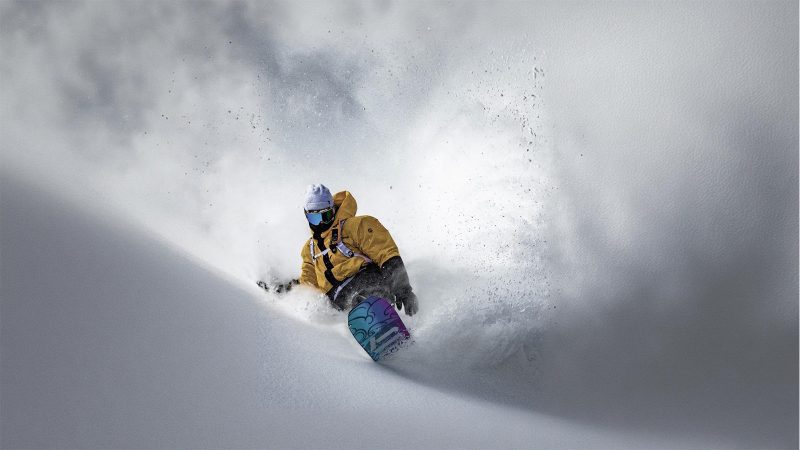
Rossignol strengthens the entry-level segment with a sustainability-first approach. Arnaud Repa, Snowboard Category Manager highlights, “A new model that has no glue, no EVA and only 5 types of materials to facilitate disassembling and prioritise servicing and recycling.” He adds, “While those features are common on mid to high-end models, they are very rare, if they exist, on starter packs.”
Karakoram continues to refine high-performance mechanical precision with Active Joining technology, carbon nyolite highbacks, articulating pods, CNC-milled 7000-series space-grade aluminum and carbon fiber buckles. ‘Built Here. Not There’ philosophy means our products and all the people behind them have a direct, tangible connection to the end-use case – having fun on the mountains!” states Hansen Kahn.
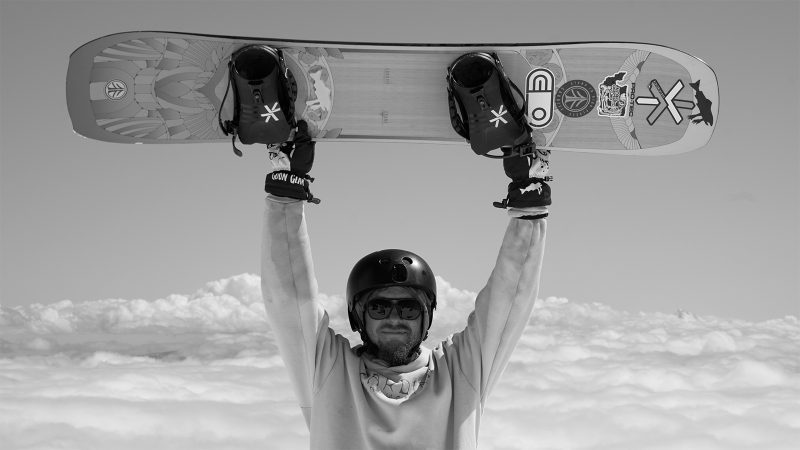
Bone Bindings demonstrates how radical new movement concepts can thrive within this traditional format. Jacobi describes, “Bone Bindings are made of a top and a base that slide relative to each other. We added high friction material so the top ‘sticks’ to the base with pressure on it, but in the air where there is no pressure, they are free to slide.” Two-straps remain the category where the full spectrum of innovation – from sustainability to space-grade materials – continues to thrive. The traditional binding isn’t going anywhere. It’s just getting better!

The 26/27 season proves that binding innovation is not only accelerating – it’s thriving. From fast-entry breakthroughs to refined classics, every corner of the market is moving forward with confidence and creativity. Riders get more choice, more performance, and more fun, and retailers can look ahead knowing the category has never been stronger. The future of snowboard bindings isn’t just bright – it’s already here.
Brand Previews