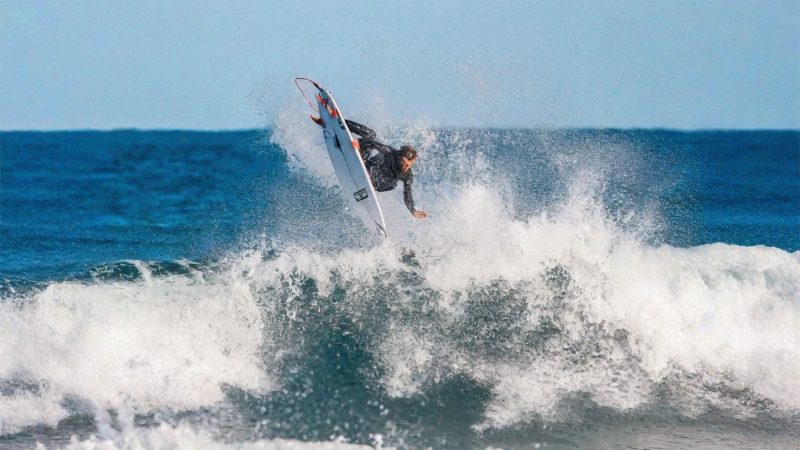
Chilli Surfboards 2026 Preview
Retail Buyers Guide: Surfboards 2026 Retail Buyer’s Guide
Brand: Chilli
Interviewee: Susan Marks, Sales
The latest market studies show a 25% growth in worldwide participation between 2018 and 2024? Does this translate in your sales pattern?
Yes, that growth has definitely translated into our sales patterns across Europe. The initial impact was very volume-driven, especially during and immediately after the Covid period, when a large number of new surfers entered the water. That created strong demand for accessible boards. What we’re seeing now, though, is a second phase: those surfers are progressing. They’re no longer just buying their first board, they’re looking for something that helps them surf better, catch more waves, and evolve. So today, the growth is less about entry-level volume and more about progression, driving demand for hybrid shortboards, mid-lengths, and versatile all-rounders. This is exactly where Chilli Surfboards is strongly positioned. Our range has evolved to meet that progression curve, with a solid offering of mid-lengths and user-friendly all-rounders that still carry performance DNA. These boards are designed to bridge the gap between accessibility and progression, giving surfers more paddle power, more flow, and more confidence, without losing responsiveness. In that sense, the current market shift aligns perfectly with what we’re building: boards that work in real-world conditions and help surfers move forward in their surfing.
Can you share the sales ratio between stock boards, custom orders, online D2C vs brick and mortar shops?
In Europe, surfboard sales are still very much rooted in core retail. Stock boards represent the majority of our business, roughly around 80 percent, with custom orders making up the remaining 20 percent. Customs are important for more experienced surfers, but the average customer is looking for immediate availability and proven models. When it comes to distribution channels, brick and mortar surf shops continue to dominate, accounting for around 70 percent of sales. Online and D2C channels are growing steadily, but they still represent a smaller portion, around 30 percent. Surfboards are a highly considered purchase, and most surfers still value the in-store experience, expert advice, and the ability to physically see and feel the product before committing.
How can we lure back the newcomers into hardboards while softboards are their go-to choice?
The transition from softboards to hardboards is all about reducing friction and intimidation. Softboards have set a very high benchmark in terms of accessibility; they’re safe, forgiving, and easy to use. To bring those surfers into hardboards, we need to meet them halfway. That means offering designs that retain forgiveness but introduce performance in a very intuitive way. Volume distribution, stable outlines, and easy paddling characteristics are key. This is exactly where Chilli Surfboards comes into play. Our range includes models specifically designed to ease that transition, blending user-friendly volume with refined performance DNA. Boards like our mid-lengths and friendly daily drivers are built to feel instantly familiar underfoot, while unlocking more speed, flow, and maneuverability as the surfer progresses. At the same time, communication at retail level is crucial: surfers need to clearly understand what they gain from switching – more speed, better turning, more progression – without feeling like they’re taking a risk. Having a brand like Chilli in the mix makes that conversation easier, because the shapes themselves already embody that bridge: accessible, but not limiting. Ultimately, it’s about reframing hardboards not as a challenge, but as the next step in having more fun, and positioning the right Chilli models as that natural, confidence-building progression.
Which are the most sought after designs in 2026? (Mids, fish, grovelers, hi-perf, logs…)
In 2026, the market continues to be firmly rooted in performance surfing, but with a clear shift towards models that deliver that performance in a more consistent and usable way. It’s no longer just about peak performance in ideal conditions; it’s about boards that work every day. Within Chilli Surfboards, this is clearly reflected in the strong demand for models like the HKII and the Rare Bird Evo. These are not alternative shapes; they are core performance boards, refined to cover a wider range of conditions and surfers. The HKII stands out as a highly versatile performance shortboard, with a slightly more forgiving outline and easy speed generation, allowing surfers to push their surfing without needing perfect waves. At the same time, the Rare Bird Evo builds on a proven high-performance platform, offering a balance of speed, control, and responsiveness that translates across everyday conditions. What this shows is that the market hasn’t moved away from performance; it has evolved towards high-performance boards with greater range and consistency. Surfers still want responsiveness, drive, and progression, but in boards that deliver those qualities more often, not just in perfect surf. Ultimately, the trend is clear: performance remains at the core, but adaptability is what defines the best-selling models, and that’s exactly where our range excels.
In comparison, which designs tend to fall back?
Some of our older high-performance models have seen a relative slowdown, which is expected in a premium performance category where boards need to be constantly refined, updated, and pushed forward to stay relevant. Within Chilli Surfboards, performance is never static, it evolves. Premium high-performance shortboards require continuous development in outline, rocker, foil, and rail refinement to meet the expectations of modern surfing and progression at the highest level. As newer iterations and more versatile performance designs come through, older models naturally phase out of peak demand. This is clearly reflected in the transition from legacy performance models (like the Spawn or the original Fader) to more current developments such as the FAD3R and the Blueprint, which represents the latest step in this ongoing refinement process. This evolution reinforces a healthy balance across our range: while older models naturally step back, the current lineup continues to push forward with updated designs that better match how and where surfers are actually surfing today, ensuring that every board in the current range represents the most refined version of performance for its intended purpose. Ultimately, it’s less about categories slowing down, and more about our commitment to constant evolution/improvement and continuously upgrading our benchmarks — keeping the range relevant, progressive, and aligned with modern surfing.
Construction wise, EPS/Epoxy+carbon is gaining momentum. Do you think the fancy tech constructions are all smoke and mirrors, and PU boards won’t disappear shortly?
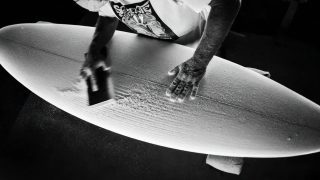
PU will remain a core part of the surfboard market for the foreseeable future. It still delivers a very specific feel in the water that many surfers continue to prefer. That said, EPS/Epoxy constructions, particularly when combined with advanced carbon reinforcement, are not just an alternative, they represent a genuine step forward in performance efficiency for a large part of the market. Within Chilli Surfboards, this is clearly expressed through technologies like Carbon Black Spice, a construction based on an EPS core with a traditional stringer, reinforced with carbon strategically applied on the bottom and along the rails. This creates a unique balance: it preserves a more PU-like sense of predictability, control, and familiar flex through the stringer, while still unlocking the inherent benefits of EPS and carbon, namely increased liveliness, speed, and responsiveness. The result is a board that feels noticeably lighter underfoot, more efficient in terms of wave count, and more reactive in weaker/average conditions while still maintaining controlled, performance-driven flex. What we’re seeing is therefore not a replacement, but a diversification of performance materials. PU continues to define a very specific feel and rail engagement that remains irreplaceable for many surfers, while EPS with carbon delivers clear advantages in paddle speed, durability, and everyday performance range. The key point is that the market is becoming more informed and segmented: surfers are not choosing between “good and bad”, but between different performance tools. And in that context, Carbon Black Spice represents one of the most advanced and efficient expressions of modern surfboard construction.
Organic grown and eco-blanks are available for mass production nowadays: what is your take on those?
Sustainability is becoming increasingly important, especially in the European market, where consumers are more conscious about environmental impact. Eco-blanks and alternative materials are evolving quickly and are starting to become viable at a larger scale. However, performance, consistency, and reliability still need to match traditional materials, and that remains the benchmark. From our perspective, it’s about balancing innovation with functionality. We support the development of more sustainable solutions, but they need to perform in real surf conditions and meet the expectations of the end user. The direction is clear, though: the industry is moving toward lower-impact production, and over time, those technologies will become more integrated into mainstream offerings.
Any tips for retailers trying to sort out their order sheets with more designs available than they can actually stock?
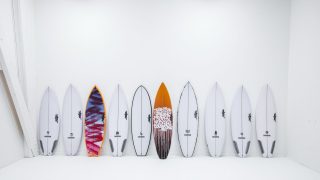
The key for retailers is to stay focused and avoid overcomplicating their range. Instead of trying to cover every possible niche, it’s more effective to build a tight, well-curated selection based on their local conditions and customer profile. A strong quiver doesn’t need to be large; it needs to be relevant. Typically, that means covering a few essential categories: a reliable all-round shortboard, a groveler or small-wave option, and a mid-length for versatility. From there, it’s about backing proven models and ensuring staff can confidently explain and recommend them. Good product knowledge and clear positioning at shop level will always outperform a wide but unfocused assortment. In the end, it’s not about offering more boards, it’s about offering the right boards.
Key Products:
HKII:
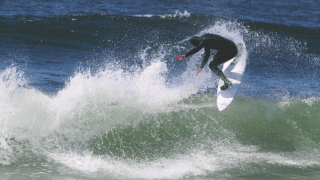
The HKII is a highly versatile everyday performance shortboard that delivers speed, control, and easy wave-catching in a user-friendly design. A fuller front outline helps with paddling and take-offs, while the refined rail line allows smooth, predictable rail-to-rail surfing. The pulled-in swallow tail adds drive and control through turns, making it reliable in a wide range of conditions. With a balanced rocker and forgiving bottom shape, it’s built to perform consistently while still keeping the core Chilli Surfboards performance feel.
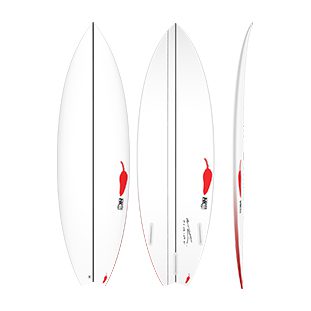
HKII
Rare Bird Evo:
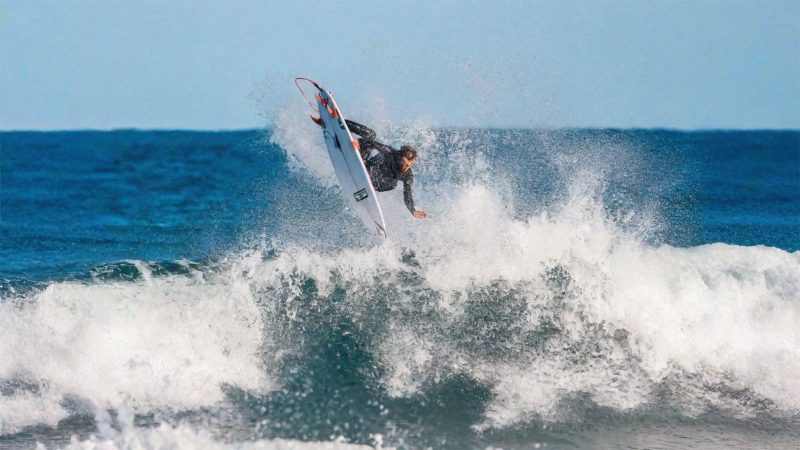
The Rare Bird Evo is a next-generation all-round performance board designed to deliver speed, control, and versatility in a wide range of conditions. Building on the original Rare Bird – our best-selling model of all time – it features a refined outline for improved flow and manoeuvrability, a balanced single-to-double concave with slight vee for smooth rail transitions, and a modern thumb tail for added control. With a medium rocker and 5-fin setup, it adapts easily from small, weak surf to more powerful conditions, offering a fast, responsive and highly reliable daily performance option.
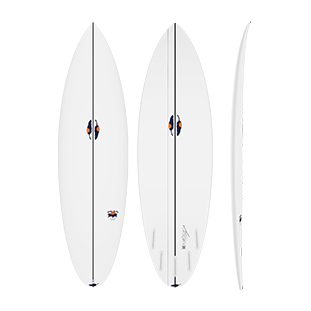
rare bird evo
Mid Strength:
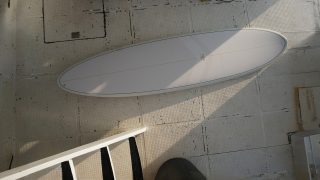
Paddles long, surfs short. The Mid Strength is a performance mid-length designed for easy paddling, wave catching, and effortless surfing across a wide range of conditions. With a fuller nose for paddle power, a curvy outline for flow, and a soft round tail for smooth, forgiving turns, it feels responsive and intuitive for a longer board. A balanced rocker and refined bottom contours ensure speed, control, and easy trim, making it a versatile option for surfers who want maximum waves with minimum effort while still retaining a true performance feel.
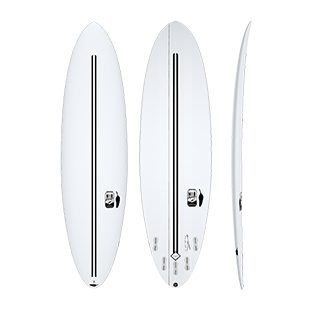
mid strength eps
Brand Previews