Gecko Water Helmets 2026 Preview
Retail Buyers Guide: Water Helmets 2026 Retail Buyer’s Guide
Brand: Gecko
Interviewee: Emily Honey – Marketing
How was the water helmets business in 2025?
In 2025, the water helmets market looked like it was slowly but steadily picking up. It’s not one of those explosive, overnight-growth kinds of categories, but more of a gradual shift as more people across water sports start thinking about head protection. Whilst surfing is a large portion of helmet sales however, interest seems to be spreading more beyond that too, into things like bodyboarding, foiling, surf photography, and adaptive surfing. Basically, anywhere people are spending more time in the water or pushing into slightly higher-risk conditions. A lot of the momentum seems to come from awareness building over time. People hearing about wipeouts, near misses, or just having their own small scares tends to make them more open to the idea of wearing protection, especially newer participants who don’t have years of “I don’t need that” habits built in yet. Overall, it feels like a category that’s gradually expanding its reach rather than suddenly becoming mainstream—growing steadily as more types of users come into the mix and awareness keeps building over time.
Which are the leading watersports as far as helmet use? Any movement within the distinct disciplines
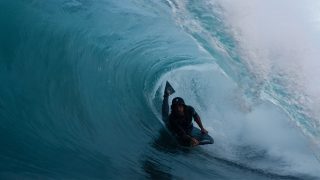
Those who find themselves lower in the water (eg, bodyboarders, surf photographers) have been our main customers this year and for the past few years actually. Being submurged lower in the water means they are 1) More subseptible for a nasty hit with a surfboard, and 2) They are harder to see. Our surf helmets that come in fluorecent colours have been really popular with these guys. On the other side of this we have had a few tow surfers and jet ski riders who have been icorporating our helmets into their PPE for the sheer size and risk of the waves they are surfing. The big wave surfers face other risks such as reefs and jet ski hits, but at the same time also require the visability that our bright helmets provide.
Do you have any data regarding the user demographics, and especially their age groups?
We don’t have any recorded data, other first hand experience of talking to and serving our customers. Most of our customers do tend to be men, and whilst we do have customers across all age ranges, I would say our most common age group is 30-50yrs.
Are you favoring multi-purpose helmet designs or models intended for a single sport?
The answer really depends on the user and the range of activities they take part in. In general, a helmet designed for a specific sport can offer the most refined performance, as it can be optimised for the exact demands of that environment. However, many water sports enthusiasts don’t limit themselves to a single discipline. They may switch between activities such as surfing, foiling, kite surfing, and surf kayaking, and therefore prefer a helmet that performs reliably across multiple uses. From a design perspective, this can be challenging. Different water sports place different demands on protection, but broadly they tend to fall into two categories: lightweight, streamlined helmets designed to move easily through water while protecting against boards and reefs, and more robust, full-coverage designs intended for higher-impact environments such as jet skis, kayaks, or foils. Our surf helmet was originally developed for surfing, but over time it has been adopted across a wide range of water sports. We’ve refined it based on user feedback to maintain a sleek, close-fitting profile while retaining the strength of its fibreglass shell.
Please take us through your water helmet range.
The Gecko Head Gear range spans from water sports helmets through to full-face marine helmets used by naval and police forces. For board sports, our Surf Lid remains the core product. It is the original helmet that launched the company in 1993, and while it has been refined over time, it remains very close to the original design. It continues to be widely used across surfing and other water sports due to its balance of comfort, protection, and lightweight performance. Building on that foundation, the design was later developed into an open-face marine helmet for rescue use. This model was originally adopted by the RNLI and went on to serve them for around 30 years. Today, variations of this helmet are used by rescue organisations around the world, including DLRG, SNSM, the Canadian Coast Guard, and KNRM. Gecko also produces full-face marine helmets designed for military, police, and specialist marine operations, where maximum protection is required in demanding environments.
What are the specific tech requirements for waterhelmets compared to other action sports ones (drainage and drying, impact protection, comfort, styling…)
Water helmets tend to have a slightly different set of design priorities compared to helmets used in many land-based action sports, mainly because they are constantly exposed to water, repeated immersion, and changing conditions in the marine environment. Key considerations typically include effective drainage and drying, reliable impact protection, long-term comfort when wet, and a streamlined shape to support movement through the water. Using our surf helmet as an example, several features have been developed with these needs in mind. The fibreglass shell is lightweight yet strong, and its grooved design helps improve both strength-to-weight performance and water runoff. An inflatable liner is used to provide a more personalised fit for each wearer. It also helps with comfort in the water, including buoyancy and warmth, while its internal design and materials help reduce water retention and the grooves in the liner limit “bucketing” when duck diving or after wipeouts. Hydrophobic materials are used to help reduce water absorption, so the helmet remains lighter and more comfortable during use. The neoprene front section adds comfort and contributes to a smoother, more streamlined feel in the water. The ear holes are positioned slightly above the natural ear line to help reduce direct water impact, which may help lower the risk of issues such as surfers ear, while still allowing good awareness of surrounding sound. Overall, water helmets need to balance protection, comfort, and performance in wet conditions, which makes their design a little more specialised than many traditional action sports helmets.
Key Products:
Gecko Surf Lid:
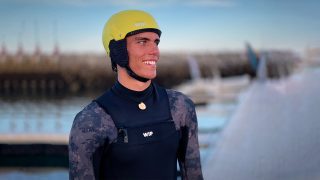
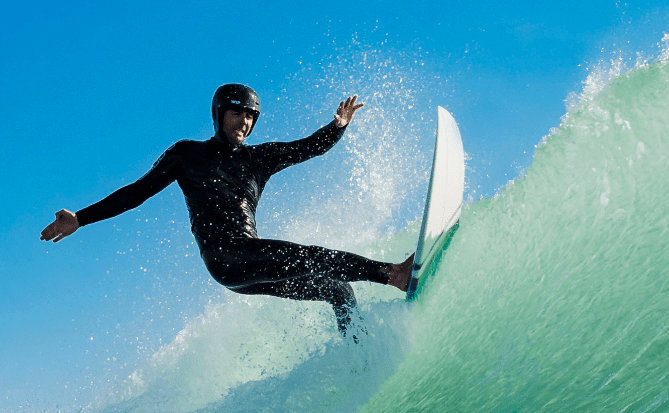
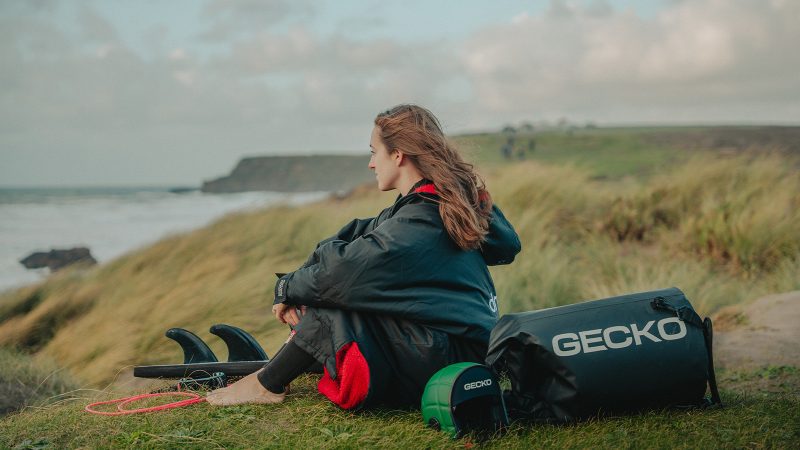
The Gecko Head Gear Surf Lid is a lightweight, stylish helmet designed for warmth, comfort, and protection in water sports. It features a durable fibreglass shell, anti-soak materials, and a patented inflatable liner for a custom fit. With enhanced hearing design and accessory compatibility, it’s ideal for surfers and extreme water enthusiasts alike.
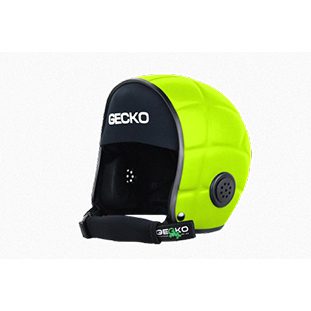
flo_yellow_surf
Brand Previews