






SUP 2026 Retail Buyer’s Guide
A new Allround length standard, more hybrids iSUP, a surprisingly resilient hardboard category, and an appealing key word –“premiumisation”. Who said 2026 would be boring? Trend report by David Bianic.

Pumping up a SUP to full pressure always takes some time, while it deflates in a blink once the valve is released. Metaphorically, the market mimicked the inflation procedure: full of itself, it burst in 2021, flatlined, leaving tons of SKUs in warehouses and retailers sales floors. What ensued was a long and industrious “cleansing” phase to effectively purge the market of toxic overstock levels accumulated during the 2022-2024 cycle.
While positive indicators gradually showed up, 2025 represented a definitive pivot point according to brands representatives. “After years of overstocks, discounts, close outs and industry speculation, 2025 appears to be the year of consolidation the industry has long been reporting on and in some ways waiting for,” reports George Shillito, Commercial Director, Red Equipment.
Leading manufacturers like Glory Boards and Starboard also report that once the pressure to liquidate stagnant inventory subsided, it allowed for a reset of retail expectations: “Low-quality, price-driven products are losing relevance as customers prioritise brand trust”, ensures Stefan Karpe, Founder & CEO of Glory Boards.
While explosive volume growth has leveled off, the increase in Average Selling Price (ASP) suggests a more discerning consumer base, “potentially indicating a shift towards premiumisation”, contemplates Tom Lazarus, Global Ops Manager at VAST.
Streamlining your range is also a simple way not to pave the way for future overstocks, as Naish did for 2026: “We have reduced the number of models and focused on the key sizes in the new range,” report Zdenek Maryzko, Product manager, and Michi Schweiger, Designer.
Distribution Strategy: Hybrid Model and Channel Segmentation
This healthier inventory state also means brands are no longer forced to dump stock into any available channel to maintain liquidity. Channel strategy is now a primary differentiator for premium brands, which are increasingly adopting a hybrid approach: they cater to the price-sensitive entry-level market via online channels while safeguarding the margins of brick-and-mortar partners who handle technical, high-performance models that require professional explanation. “This hybrid model allows us to support our partners while also making sure that consumers can always access our products, regardless of their location”, says Paul Mols, Marketing Manager, Jobe Sports.
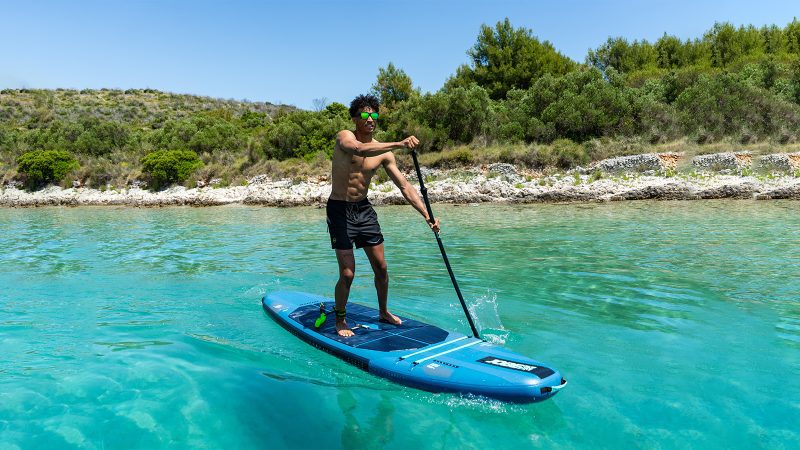
Conversely, brands like Indiana Paddle & Surf and Norden take an “all-channels” approach. Indiana maintains that all products should be available on all platforms without limitation, viewing water sports schools and a diverse online presence as essential for growth. Mistral adds another layer to this by engaging in “special project work with key retailers” to keep their strategy motivating and responsive to market shifts: “The traditional vertical chain of selling has long been eroded as the only way to do business. Survival is based on a varied model”, claims Steve West, Consultant.
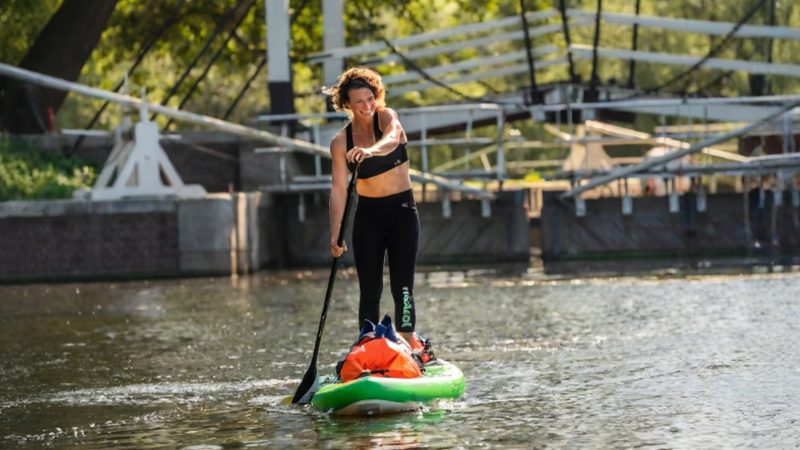
2026 Allround & Touring iSUPs
The “Allround” segment remains the undeniable backbone of the SUP market, but the rise of the “Touring” category led the industry to rethink what was supposed to be the “magic length”, moving away from the traditional 10’6” length in favor of the 11’6” standard. From a retail perspective, one may argue this reduces inventory risk; an 11’6” board covers a much wider range of rider weights and skill levels, ensuring a faster stock turn and reducing the need to carry multiple legacy sizes. To see these trends in practice, one only needs to look at the Shark 11’6” Cruiser as it “delivers everything a 10’6” offers in terms of accessibility… but with the added benefits of improved glide”, sums up Alan Xu, Owner, Shark SUPs.
2026 also sees a continuation of the move from “knitted” to “woven” drop-stitch constructions. Brands like Coasto and Starboard have pivoted to woven materials because they offer a superior stiffness-to-weight ratio, creating a board that feels more “hardboard-like” on the water. Furthermore, the push for “compact” or “foldable” designs is gaining momentum with key models such as Jobe’s Rasa 10.6 and the Coasto Flip, significantly reducing the storage footprint – a major selling point for urban-dwelling paddlers.
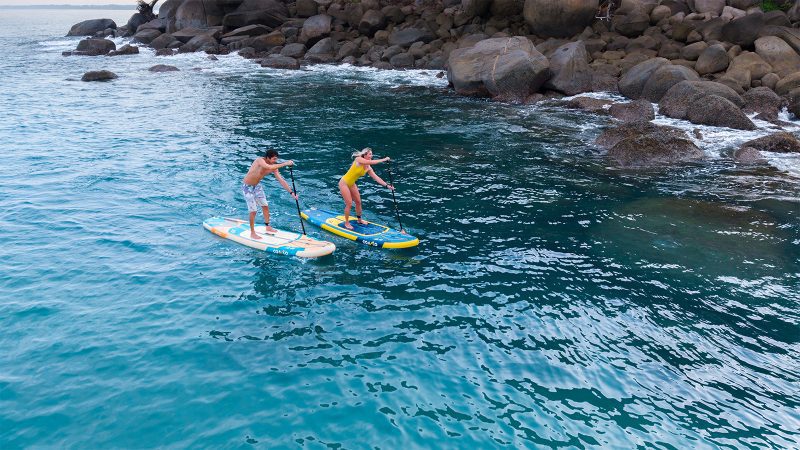
2026 Specialty iSUPs
After years of experimentation with hyper-niche categories, the industry has increasingly replaced those with versatile “multitools” boards that can perform a specific task but remain functional for daily recreational use. SROKA and Coasto both observe that highly specialised models, such as those for whitewater, are losing momentum among the general public. Instead, the “Kayak-Combo” or hybrid model is thriving.

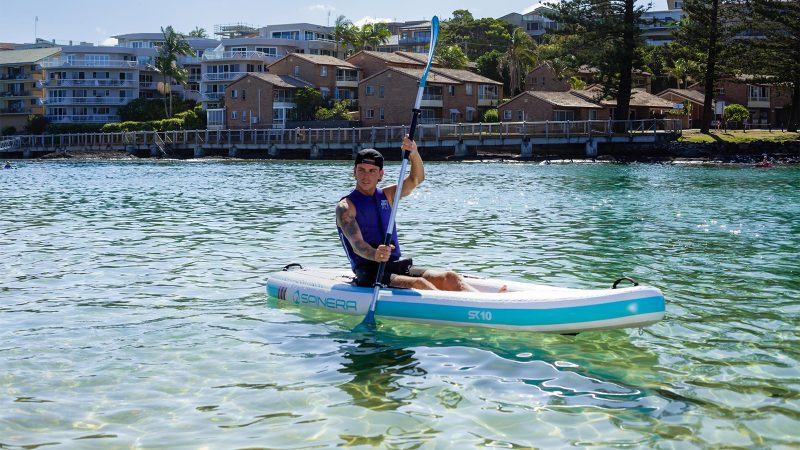
Jobe’s Tana concept and Wattsup’s Espadon demonstrate this shift, offering D-rings for seats and multi-use paddles. Vast Boardsports points out “a potential older demographic with more disposable income” who prioritise fishing and utility features.
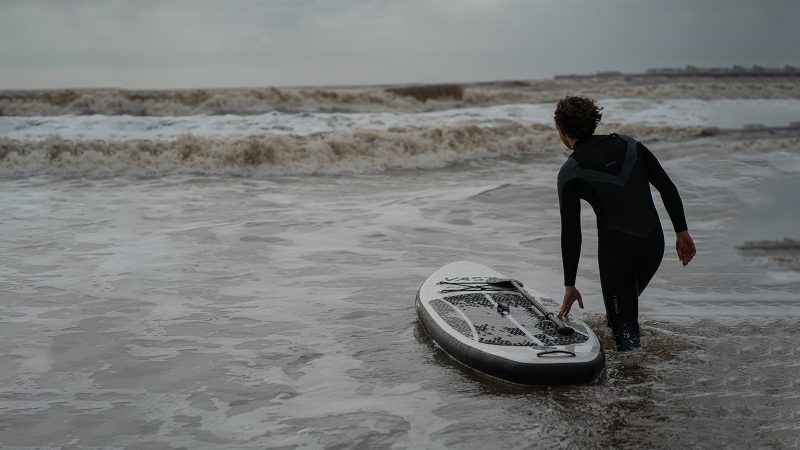
Additionally, Sandbanks notes that “e-propulsion” is potentially the next step in leisure innovation, providing a forward-looking glimpse into the 2027 market. The contrast between extreme niche and functional hybridity is perfectly illustrated by the Indiana 22’0 Dragon Touring and the Jobe Aero Tana Hybrid 11.2. The Indiana Dragon is a 22-foot board designed for groups of up to six paddlers—a high-visibility specialty item for clubs. In contrast, the Jobe Aero Tana Hybrid 11.2 represents the modern consumer’s desire for versatility, allowing users to switch between a standard SUP session and a relaxed kayak experience with an attachable seat and a 5-year warranty.
iSUPs helped the once gloomy windsurfing category regain momentum with the advent of hybrid models. Duotone’s Alfa WS Air stands as a banger for 2026. Based on a “Flow” shape, it features a Malibu longboard style with a mastfoot insert featuring a patented iBase, for an instant transition to windsurfing, and equipped with two removable center fins essential for upwind capability, that require no tools for installation.
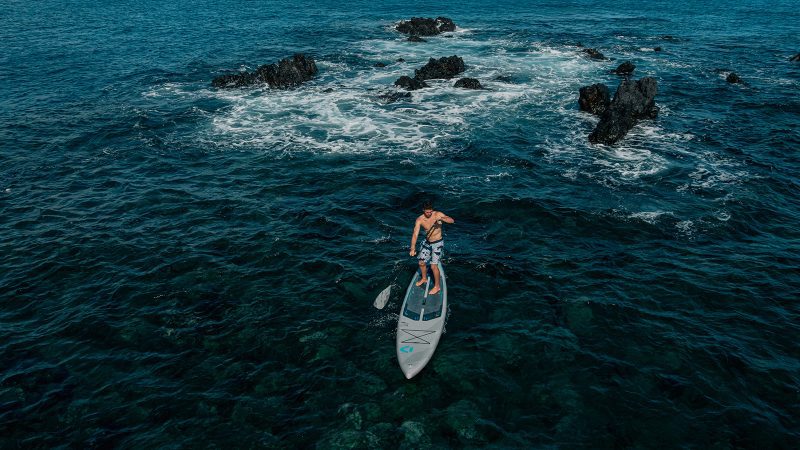
A marginal yet key trend for 2026 is the move toward eco-friendly manufacturing, with Wattsup shifting to recycled kraft paper packaging and Skiffo utilizing “24P Free” materials that are guaranteed free of harmful substances, reflecting a growing ethical approach in the industry. Manufacturing processes like heat-welding have become the new baseline for quality.
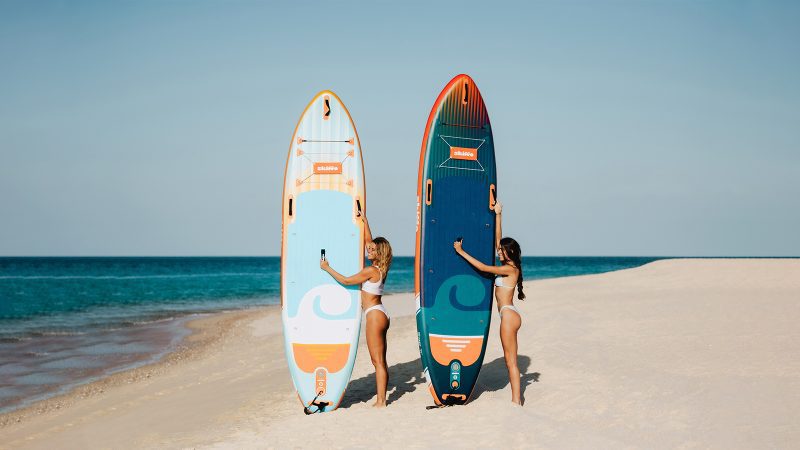
Jbay.zone is leading this charge, implementing RRT 2.0 heat-welded technology with triple-layer rails across their range to reduce glue reliance and increase lifespan. However, Red Equipment points out that the “race to the bottom” in pricing has stalled radical innovation in some sectors. Red is countering this by utilising MSL800 material – a material innovation that offers significant weight savings and stiffness – and maintaining a “4-year pipeline” of compliance-led innovations.
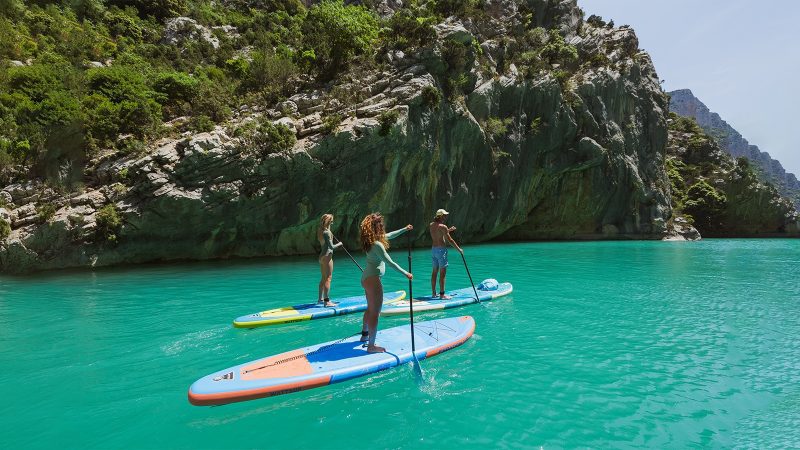
Steve West at Mistral, offers a pragmatic view: “There’s only so much the consumer will tolerate in respect of cost versus performance gains in an inflatable… Today’s inflatables are, in fact, heavier but more durable and less prone to twisting issues.” Small refinements with significant performance impacts are exemplified by the Shark Clip-On Nose Cone The nose cone improves water flow and reduces drag.
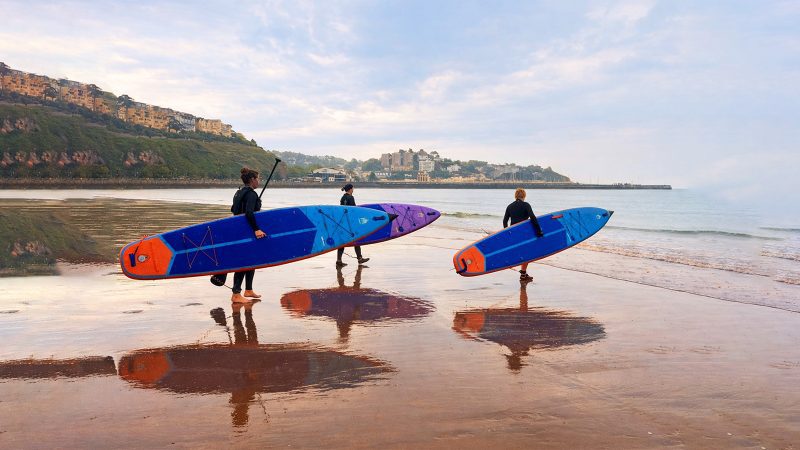
2026 Hardboard: Year of the Renaissance?
While hardboard volumes represent the smallest share of the market, they remain remarkably stable within the rental, school, and club sectors. And predictability is more sought after than drastic ups & downs. And here comes the physical retail advantage: “With hardboards it’s a different game, physical shops have a clear advantage, shipping is difficult and very pricey these days. This fact can bring customers back to shops again,” suggest Andy Wirtz, CEO, Norden.
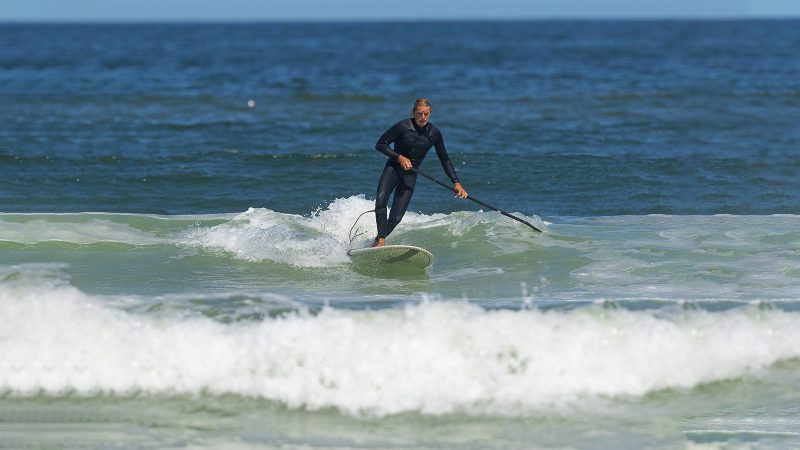
Brands like NSP and SROKA are capitalising on this by developing specialised hardboard ranges, such as the SROKA COMET, which features a patented system designed specifically for schools and rental operators. “The signal is clear: our first COMET stock sold out entirely at launch”, says Bruno Sroka.
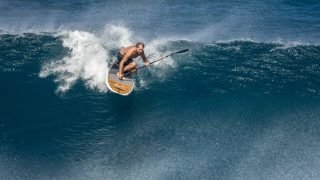
For 2026, the focus is on “playful” shapes and extreme durability. NSP’s HIT (High-Interest Thermoform) boards have captured a significant share of the rental market because they can withstand the rigors of resort use. Meanwhile, Starboard is pushing the limits of the Surf SUP trend with the TwinFin and the TallTwin (a Bali Longboard SUP Revolution winner).
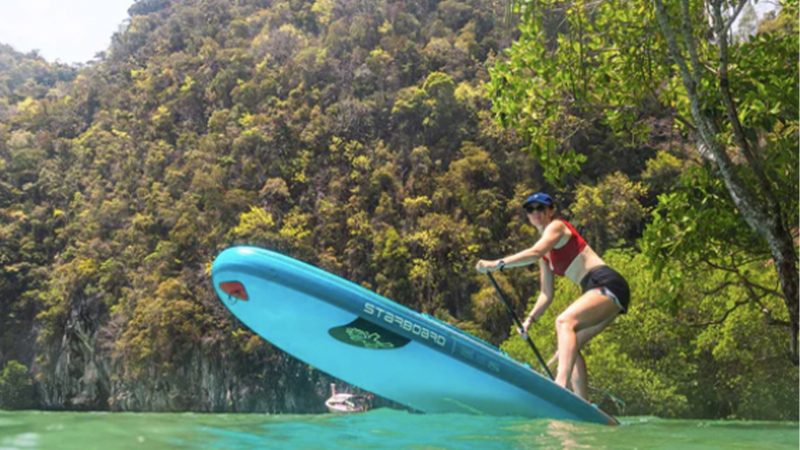
Norden is also bringing excitement back to the category by arguing that it is much easier to catch waves on a SUP than a traditional surfboard: “There is a lot of people out there that went from SUPing to surfing but actually had more fun SUPing then surfing because it is so much easier to catch a wave, we want to show that again”, advocates Andy Wirtz.
Hardboards also shine with down-specced versions of elite race boards. Not exactly a mere touring design, not as technically demanding as a race needle either. Two models highlighting this trend are the Indiana Le Doigt 12’0 Carbon and the NSP OMNI Elements. “Le Doigt,” designed by Swiss champion Steeve Fleury, combines “these boards combine the sportiness of Touring SUPs with the playful nature of Allround boards”, says Nikolaus Dietrich, Head of Sales. The NSP OMNI Elements serves as the “bread and butter” of the range, bridging the gap between recreation and racing with an epoxy construction that balances durability and value.“The Omni works in a wide range of conditions, can be used as a recreational raceboard or touring board and is super fun as a SUP surfboard as well!”, guarantees Sander Blauw, Sales & Marketing.
Ultimately, these high-touch, technical products reinforce the importance of the physical retailer. In an increasingly digital world, the specialised knowledge required to sell these boards is the retailer’s greatest asset.
Retailer’s Support: Differentiation
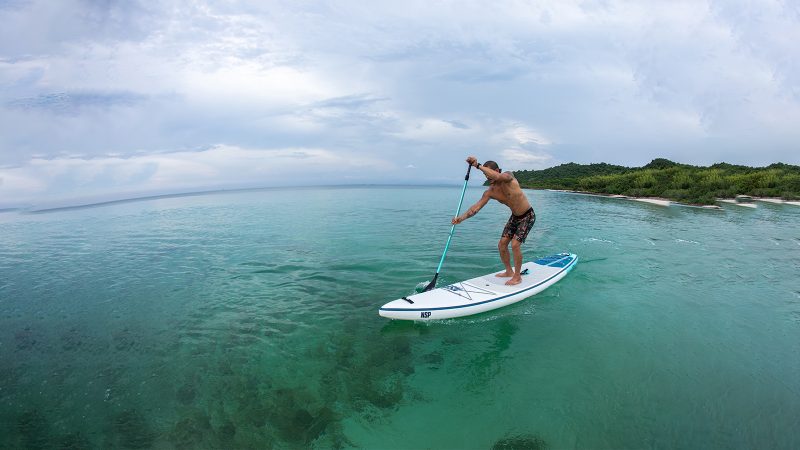
In a market where many entry-level SUPs have become click-away commodities, physical retailers must pivot toward human expertise and community building. Sandbanks notes that the SUP market has become “very similar to the bike market,” where customers want to see the product and interact with “real people” before spending hundreds of pounds.
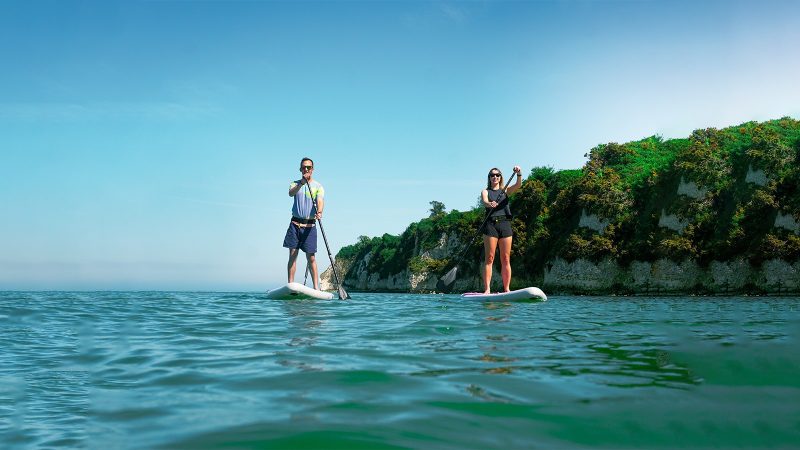
Sander Blauw at NSP ensures it is all about connection and education, “This is where the core shops come into play… sharing knowledge, showing the different brands and models, giving advice, hosting regular paddle clinics… it’s not about races… but about inclusion.”
Brand support strategies are becoming increasingly creative. Indiana Paddle & Surf offers attractive conditions for test and demo products, recognising that “try-and-buy” is a critical differentiator. Jbay.zone provides branded, customised in-store displays to highlight the physical product, while NSP is doubling down on “paddle clinics” and social sessions to build local communities. Mistral is supporting the “back-end” of retail by offering “a streamlined B2B online service”, as retailers and distributors are “no different in wanting a simplified ordering system”.
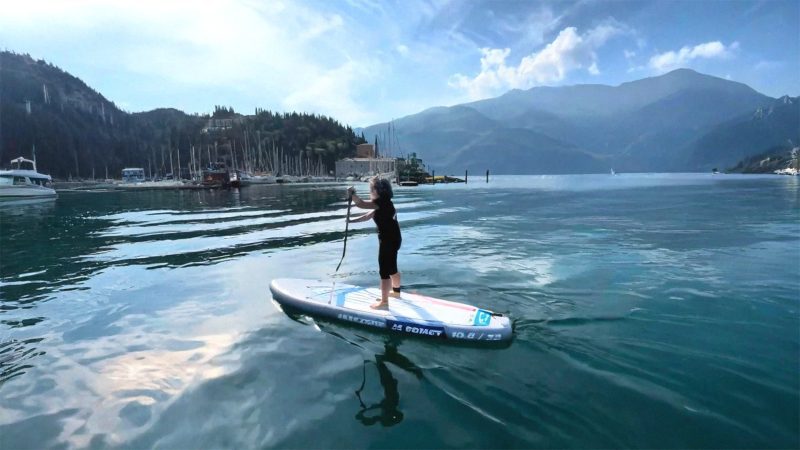
By focusing on these premium, experience-led sales, retailers can move beyond price competition and build lasting customer relationships. The 2026 season rewards those who prioritize the human element of the paddleboarding lifestyle.
Brand Previews