 Pro Content
Big Wig Interview: Euroglass Owner Steven ‘Belly’ Bell
Steven ‘Belly’ Bell arrived in Hossegor, France in 1986 as a young Australian lad on the hunt for empty waves and good times. 34 years later Belly’s one of the surf industry’s key figures as owner of Hossegor’s Euroglass surfboard factory and having toured the world with the Quiksilver pro team, most notably serving as mentor to 11-time World Champ, Kelly Slater.
Back in April, as the world ground to a halt, we contacted Belly for his reading of the situation. Belly said if this was going to be anything like the 1996 crash or the 2008 GFC, he reckoned surfboards could be a good business to be in. Eight months later and after the 2020 surfing boom, we thought it high time for a proper catch-up. Belly’s surf industry insight is peerless and in this broad ranging conversation we dig into the booming surfboard market, his thoughts on surfing at the Olympics and he talks frankly about the WSL’s decision to drop France from the Championship Tour. Read on for perspective from an industry vet not scared to tackle the ecommerce model head on in a traditionally conservative industry and find out just how much Belly and Slater talk shop now they’re competing as two of the world’s leading surfboard manufacturers. Interview by SOURCE Editor, Harry Mitchell Thompson.
Belly, tell us how a young Australian lad ended up in France and what kept you here.
My name is Steven Bell, but most people call me ‘Belly’. I arrived in France in April 1986 as a young boy. I was living in Victoria, Australia before that, making surfboards, working for Rip Curl, when the surf industry was small. Harry Hodge and Maurice Cole asked me to join them in France where I discovered the empty waves, beautiful beach breaks and European culture. I loved hanging out there, so after working for a short time with Maurice Cole, I started my own factory with Phil Grace. Then I met a young French guy by the name of Pierre Agnes and we became good friends. In 1990 there weren’t really any team managers and the industry was very much in its youth. It was just a natural progression, we helped out the travelling pro surfers when they came through for the summer competitions and one thing led to another. Tom Curren was living over here at that time and we became good friends. I knew him from Rip Curl, Bells Beach when I was making boards. Tom introduced me to a young American surfer by the name of Kelly Slater who was staying in his house. Pierre needed someone to help out with the team at Quiksilver and because I had a good relationship with them, I ended up helping out the team and following Mr Slater around the world for many years. I am now back full-time at Euroglass, making surfboards again.
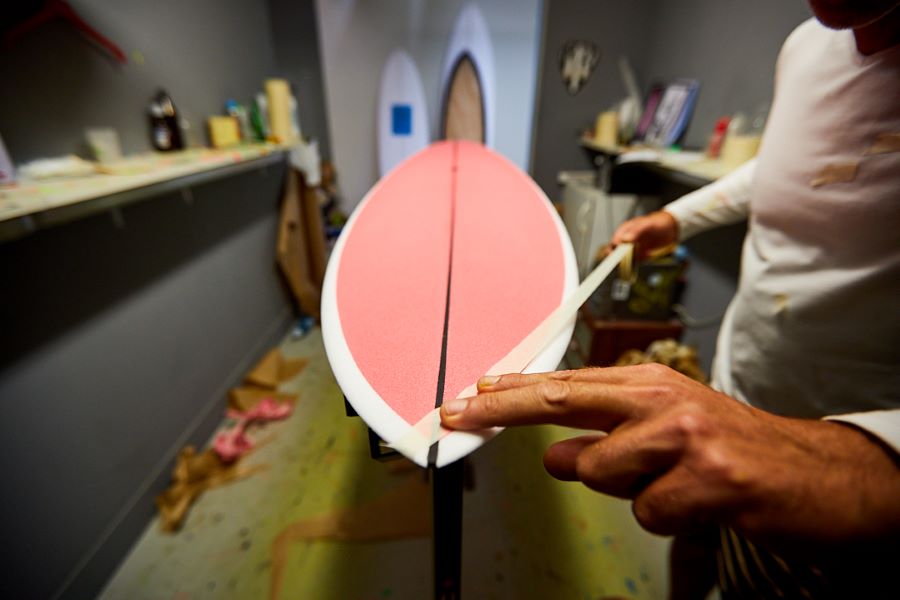
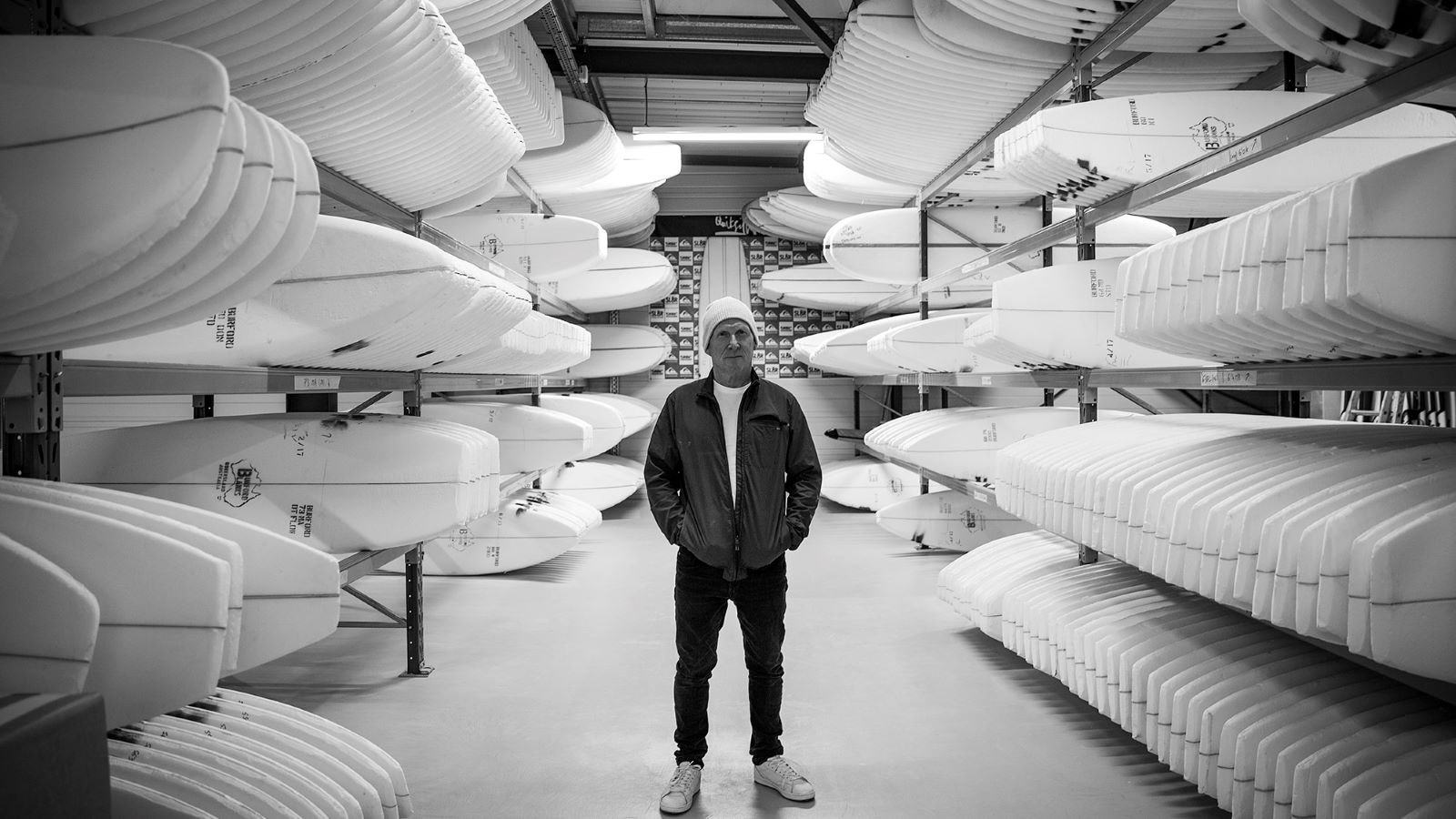
Euroglass. Photo Credit: Ash Kelleher
How has 2020 been for you personally and for Euroglass?
For me personally 2020 has been a challenge. 20 years following the World Tour with the Quiksilver team had just come to an end. It was an unbelievable experience and I was super fortunate being with the best surfers there have been for many years. When you are travelling around the world waiting for surf events you can have a lot of down time. But it also kept me in touch with everything that was going on in the surfing world. So I could stay a step ahead, see new opportunities and trends before most people. This year after finishing up the tour I ended up full-time back at my company Euroglass in Hossegor, France. We’ve gone through some difficult years, but we know the surfboard industry; margins are low and we are always mindful of productivity. It’s no secret, there aren’t many places you can hide in the surfboard business and you have to be quite careful. By coming back and working in the factory full time I was able to get things back on track which has been a great thing especially with the impact of Covid, now that everybody wants to surf. I have been very fortunate in having Matteo, my stepson. He’s been concentrating on the global business and developing the accessories and product side.
You’ve worked through a few recessions now. Surfing hardgoods have always seemed to do well during these periods…
Regarding recessions, the company is in its 30th year, so it’s survived a few; one in 1996, and another in 2009. So before this one hit a of few of us were thinking if this follows previous trends, everybody will go surfing. It’s an individual sport and cheap. Once you have invested in a surfboard and a wetsuit it’s all free, unless you’re surfing in a wave pool. So remembering 1996 when the second hand surfboard market was still small, the factory was selling out and we were getting orders that we couldn’t meet. Then in 2009, the overall economy contracted again but the surfboard market expanded especially in Europe but also globally. Looking back at those two trends I was prepared this year for when they opened the beaches up and everybody could go surfing. I didn’t think it was going to pick up as well as it has done in the last four months, but It’s definitely followed the same trend and presently it doesn’t really look like it’s going to stop.
Could you talk to us on your overall views of competitive surfing entering the Olympics and how you’re preparing the business for any potential upticks in business because of it…
I really believe it’s fantastic that the sport is going to be in the Olympic Games. But I don’t think it will get as much airtime as expected, there are lots of sports already in the Olympics that don’t get any coverage. So to develop into new countries I doubt really that this is going to have the impact that most people think. But I hope it does. With competitive surfing we are in a bit of a situation at the moment obviously with the Covid crisis. And then on top we have the situation of the WSL. Thankfully we have Dirk Ziff, he’s taken hold of the professional part of the sport. He’s trying to copy some business modules from other sports which is a very smart thing to do and he has a lot of bright people around him putting ideas on the table. There is no existing format, which is perfect for us. The WSL is very American-based, focused on the American/Anglo Saxon part of the business which is only normal because that is where their headquarters are. European surfing needs somebody there who can wave the flag, put the opportunities on the table and put the tour in touch with local political administration. Francisco Spínola in Portugal is doing a fantastic job for the WSL and it would be great to see somebody as good in France, Spain, UK and Italy, to fulfil the potential on the European side. It is inadmissible not to have a French stop on the World Championship Tour, someone needs to be on the table to lobby the WSL, to change their format. There are no set rules with the WSL, they’ve been there for many years but they could do anything they want to the tour, they need to see the opportunities and the possibilities in Europe that will benefit them. My hope for the 2020s is to reach the full potential of the European surfing market and get the next generation hooked.
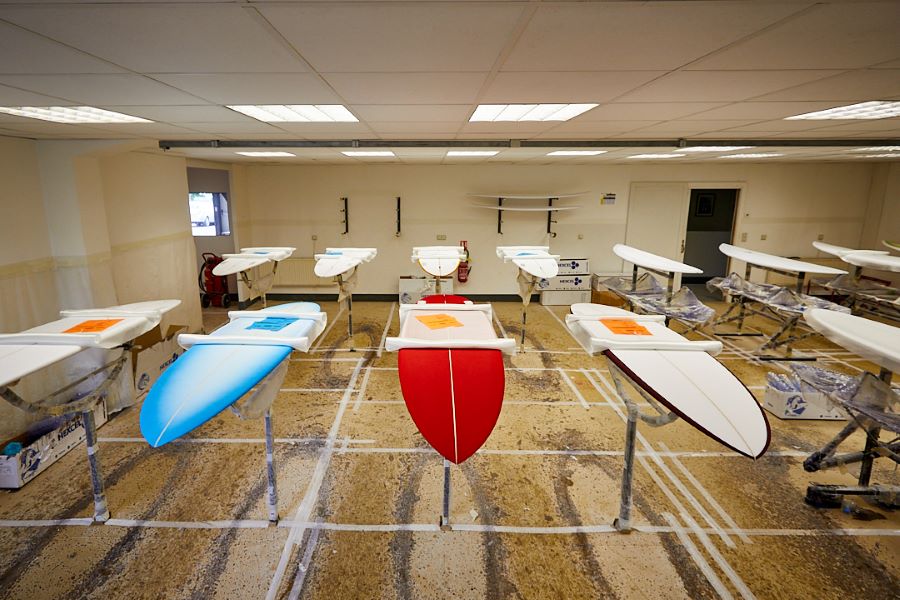
Euroglass. Photo credit: Ash Kelleher
Any thoughts on the health of the surfboard market at present? What do you see as the shining lights of 2020?
It is healthy and very segmented, you have the softboard market then you have your entry level market, and then you have the localised performance market. Then on top of that the Asian market with a few big players investing in factories, predominantly in Thailand, China and Taiwan.
This year the softboard market has been exploited by big box stores, for example Decathlon in Europe and Costco in America. These companies have the financial strength to tap into those resources and to put a product on the market which is available to a lot of people who don’t want to invest $500 in a start-up play. This has brought a lot more people into the playing field.
The local production market will always be there, it is a very cottage industry and it will always be that way. But the margins are so low and the infrastructure to build factories is really expensive and labour is something that can never go away. More people have access to shaping machines so I think there were a lot of people building 10-20 surfboards in their garage and a small percentage of them will go on to starting a business. However, these garage businesses can’t offer a permanent supply of service to professional accounts. So they will always supply a local market and they will always be there because that is the nature of our industry. People say surfboards are too expensive but they are cheap, a lot people might disagree with that but if you make a surfboard and look at the costings you will think differently.
Ecommerce is growing at the speed of light. Can you explain to us the opportunities and threats this brings to the surfboard building business?
As you say it is growing yes, the world we live in today is on the internet. It’s taken a lot of the market, there are some big players, notably a couple in the UK and xxx who are online and doing a smart consignment business for anyone who wants to put their product on the site. But it isn’t as simple as a lot of people think, obviously there is the peril of investing too much money for not enough return, so if you’re a small supplier who can only make a few 100 surfboards a year, then to invest 50,000 euros in ecommerce is pointless really, it’s not like you can just press a button and increase production 10% .
The majority of manufacturers are at full capacity. So, it’s all about supplying your existing clientele rather than trying to expand and get your figures out there, so to have that ratio of investing into an ecommerce space where you need to be wary of what other players could do. If you look at the figures of our general business I think ecommerce is about 20%, of which 20-25% of that are the big brands. At Euroglass we have invested in the last 12 months, I won’t say heavily, but enough to get up and running. It’s been working, but once it’s online it’s like anything else – you have to keep it afloat and work at it. It’s a permanent cost for the company, so it’s something you really need to be careful with, you need to sell product and keep driving traffic to your page. I don’t think it will ever take over the business but will always be a part of it
What would you say are the biggest lessons to be learnt from the 2020 pandemic?
I like to think the biggest lesson everyone has learnt is hygiene, unfortunately it takes a situation like this for people to learn. Euroglass is a fastidiously clean operation and this is now becoming the universal norm. In this sort of industry people neglect health and safety and cleanliness at the workplace. When the pandemic first hit everyone was disinfecting everything and I got upset with my workforce, trying to get them to wear masks, which I have been trying to do for 30 years. Unfortunately, it takes something like this for people to listen. Now 7-8 months into Covid the same standards are normal practice. I hope people start living in a cleaner place, respectful of one another’s personal hygiene. Let’s hope this pandemic finishes as quickly as possible, and we can learn from all this and be grateful for what we have. As everyone knows, when you can’t go surfing and do something you love, it’s not very pleasant. From the business side of it, it’s been hard on our industry but there is always an upside. We’ll see how it goes, try not to be too optimistic, be careful and prudent, learn from the past and avoid getting stuck with too much stock. Everything goes up but eventually flattens and then declines. So be wary and ready to survive the next crisis, whether it’s detrimental to the business, or an opportunity.
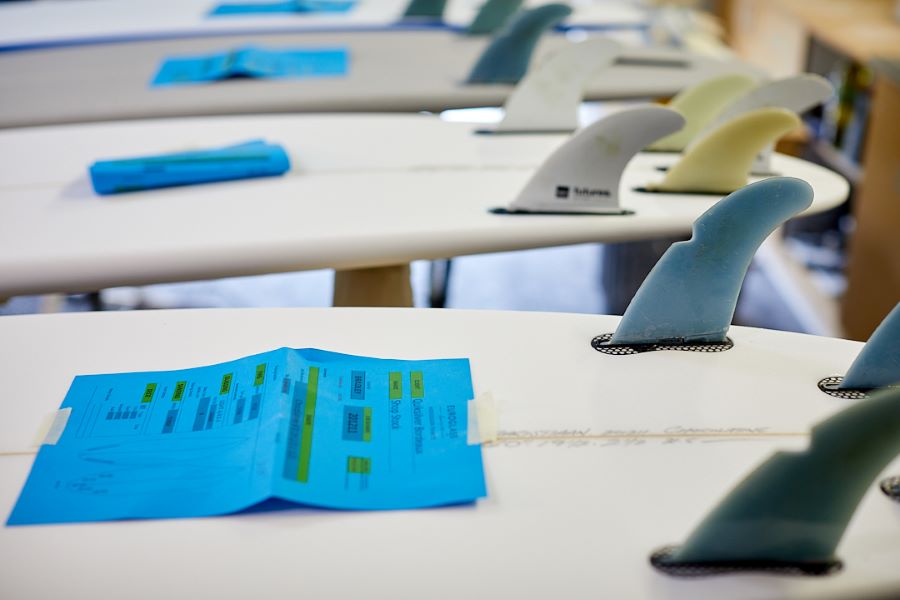
Euroglass. Photo credit: Ash Kelleher
I assume you and Mr Slater talk a lot about surfboard design and manufacturing. What would you say is the biggest thing you’ve learnt from Kelly on the subjects and vice versa?
My relationship with Mr Slater… we don’t talk about surfboard design, he’s actually the competition. When Kelly left Quiksilver I was still on tour and I still look back on going around the world and working together. But now we are more like family and friends. We don’t have any business relationships together, which I’m very happy about. We play golf together. I think he’s doing a great job with his business ventures; his Firewire brand and Outerknown brand. He’s doing good and he invests back into the business and back into the youth. He has a great facility in Thailand and other facilities around the globe where they give local guys great opportunities. It’s a bit of a different business model to what I work in, but it takes all different types of players in the world to make it go round. I leant a bit from him and I hope he can learn a little bit from us too! But, yes I am looking forward for the next time we are out on the golf course together, having dinner, when everything opens back up, but yeah that’s as far as it goes with Kelly.