 Pro Content
Retailer Help: Customer Retention & Loyalty Marketing For Your Board Shop
Customer loyalty won’t come for free. It has to be earned and maintained. Especially in today’s omnichannel shopping environment offering consumers unlimited choices. We explore the role of customer retention in this buyer’s market and the positive impact of loyalty marketing in this edition of Retailer Help by SOURCE Editor Dirk Vogel.
What are you doing to retain your customers? After all, you are 14 times more likely to sell to an existing customer than get a new customer to buy from your store. With that said, it makes sense to consider loyalty marketing and customer retention for your board shop.
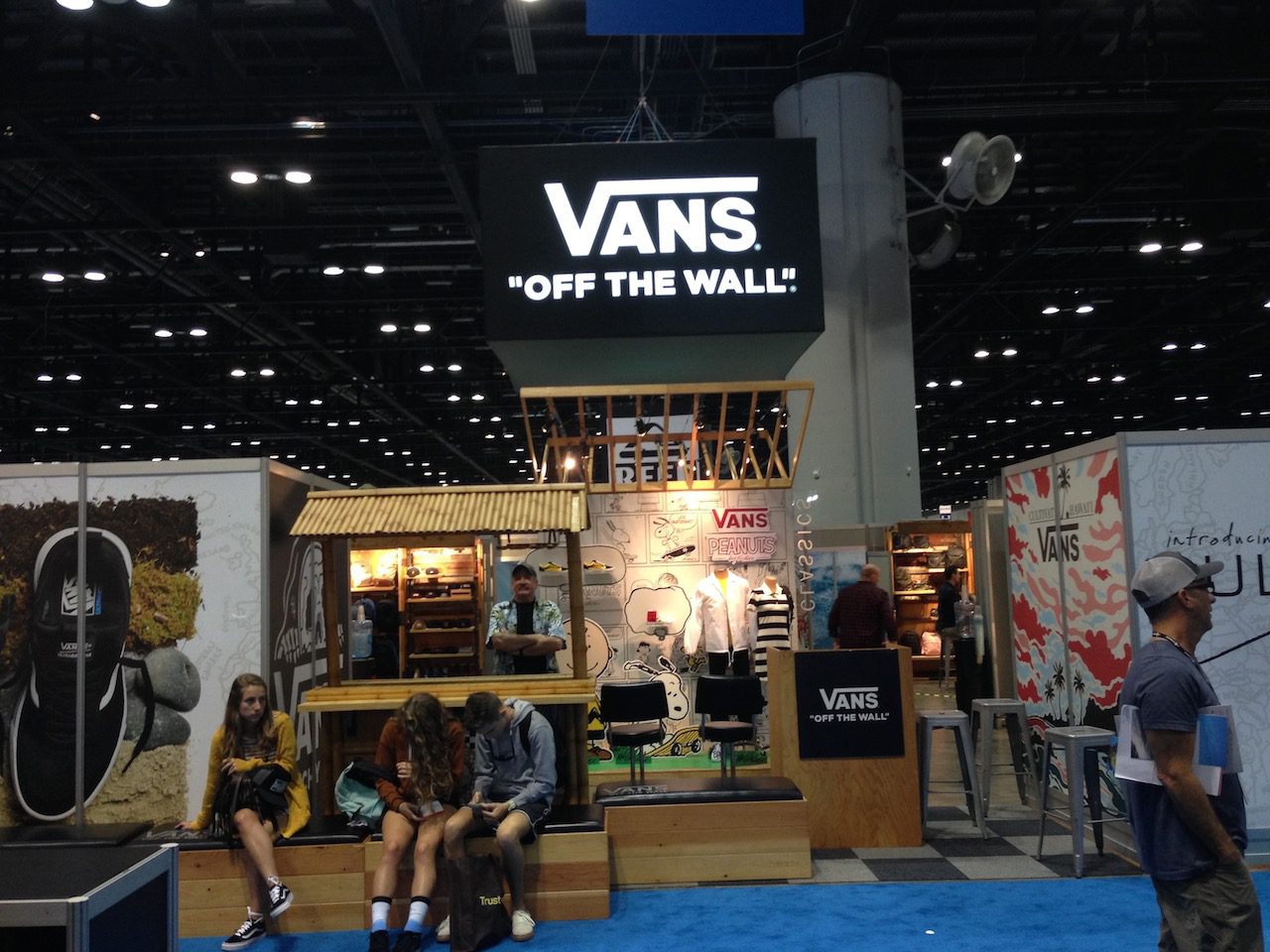
The best brands in the business are already doing it. And successfully so. The Vans Family loyalty program grew from zero to 12 million members in just two years. What’s more, these members are responsible for almost 50% of Vans’ direct-to-consumer sales, whether in-store or online. They are also more engaged on the socials and spend more per purchase than non-members.
Of course, Vans is single-handedly the largest brand in all of boardsports. But all players, large and small, benefit from cultivating a loyal audience.
This type of loyalty is exactly what retailers need in an age of hybrid shopping behaviours. The times when kids would buy all their gear exclusively at board shops are over. Instead, you may notice them buying clothing from multiple vendors – maybe from the board store, but not necessarily. The same goes for hardgoods, lots of which are freely available from Amazon and its ilk (at killer prices). Experts call it “destabilised consumption patterns.”
PLAY YOUR POSITION
The reason behind this destabilisation is simple: the growing homogeneity and interchangeability of products. Technically speaking, there are hardly any noteworthy differences between the majority of brands anymore, especially since most brands resort to widely identical sourcing structures in their production.
Here’s exactly where independent brands in the boardsports business have made a difference over the past few years. By offering unique, sustainably manufactured products, they cater to the growing consumer demand for rarefied, special goods.
Here lies a conundrum for board shops. For retailers it’s significantly harder to build a unique and memorable brand. After all, the branding of a product remains intact for however long the consumer keeps using it, whereas the branding of the store where the product was purchased is getting canned and forgotten straight away, together with the shopping bag. And due to this lack of enduring branding, it is a great challenge for retailers to effectively retain customers.
For that reason, stores need to be clear on their product offering and positioning before engaging in any type of loyalty initiative. Knowing who you are as a store and who your customers are allows for a 360-degree view of what kinds of benefits and perks you can offer as part of the loyalty relationship (see below). But first of all, you need to build an audience.
FOCUS ON FIRST-PARTY DATA
In 2021, digital marketing is being disrupted by a growing concern for consumer privacy. The times are over where you could just blanket email your entire customer list, thanks to GDPR and other legislation. Today, you need explicit opt-in and permission (also read our Retailer Help on email marketing).
Meanwhile, established marketing avenues such as online advertisements are also being dismantled. In 2022, Google will discontinue the use of all third-party cookies – used to serve targeted ads – from its Chrome browser. Apple is already eliminating trackers from Safari browsers and is in a full-blown war with Facebook over consumer tracking.
With this in mind, it’s key to rely on actionable first-party data. That includes building an active, clean list of email subscribers and loyalty program members.
THE PRICE OF LOYALTY
However, if building an email list seems like a lot of effort, keep in mind the following: It always takes investments to generate new leads, so loyal customers are of high value. How valuable? It is six times more expensive to win a new customer than to retain an existing one.
The expenditure of soliciting consumers anew for each sale if far too high. For retailers it’s becoming more and more important to be able to attach costumers to their stores in the long run. In order to quantify the sheer economic value of a regular customer, we can resort to so-called Customer-Lifetime-Values, which are a key figure in today’s retail environment:
Customer-Lifetime-Value:
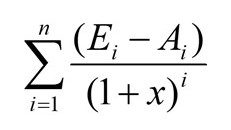
The Customer-Lifetime-Value can be displayed as the sum of all customer payments minus all customer-related expenditures. The difference between incoming and outgoing payments per year is also discounted with the usual retail interest rate to match the current date. And since expenditures in retail can hardly be attributed to one single customer, we can arrive at a practical approximation of the Customer-Lifetime-Value by adding up the individual congruence spans as the result of the retail price minus the wholesale price of a product.
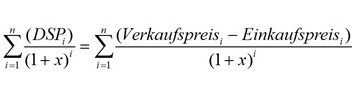
If we assume that a consumer spends their money on high-grade board sports products over a duration of 20 years, it’s evident that the Customer-Lifetime-Value can easily range into the upper quadruple digits.
CUSTOMER RETENTION SYSTEMS
Generally, stores have two options when it comes to loyalty programs:
- a) A full-fledged customer retention system with membership IDs, cards, points etc. (EXPENSIVE)
- b) A ‘soft’ program with specific discounts, offers for subscribers (CHEAP)
Many retail sectors are using so-called customer retention systems to stabilise customer relations. And these systems have long-since more than proven their worth. The advantages are obvious, and customer retention systems in all their various manifestations have become widely accepted marketing tools. Most current ERP (Enterprise Resource Planning) systems already integrate customer retention modules.
But due to the great spread of customer retention systems it’s become a challenge to find a free space in the customer’s wallet for your customer card. The main choke point here is the “capacity to absorb a new card.”
From a technical perspective, you could do without the plastic card altogether, but at the same time it provides an attractive anchor for your image, one that the customer carries with him at all times.
But there needs to be a significant benefit! The customer will only be willing to commit to a card if the personal use value of the membership compensates for it. Luckily, there’s a wide range of possibilities for providing customer club members with advantages and communicating them accordingly (see below ‘Incentives’).

Photo by Polina Tankilevitch from Pexels
SPECIAL PERKS PROGRAMS
For all retailers not ready to shell out for a full customer retention system, here’s some good news: Thanks to the rapid pace of digital transformation, lots of tools that were previously only available to large-sized companies have trickled down to the small enterprise level.
For instance, you can easily set up your online store to process coupons for select audiences, like your email subscribers. How?
Platforms like Shopify offer plenty of plug-ins and apps that synch with your email subscriber list. You can then set up discount codes, like a 15% discount or Free Shipping perk, that can only be redeemed by active subscribers. Upon checkout, the system automatically checks for subscription status and otherwise will not honour the discount.
You can easily implement this into your in-store system and offer the same perks in brick-and-mortar – only for active subscribers. Ultimately, it’s all about offering value in exchange for becoming a member.
OFFERING DISCOUNTS
There are several ways to offer value from a loyalty membership. On one hand, there are quantitative incentives in the form of customer discounts. Like mentioned above, this means that customers receive instant discounts upon purchase. Discounts are highly popular among customers since they are effective instantly without further efforts.
However, rebates do not appeal to customers with a passion for collecting perks over a period of time. In this light, a bonus system offers far more advantages to retailers: Customers need to collect bonus points up to a certain minimum level in order to use their points on a follow-up purchase or for special promotional products.
Bonus programs offer two distinct advantages for stores: They allow for the systematic filing of customer data and consequently, a consumption pattern analysis of regular customers.
At the same time, bonus programs – as opposed to instant rebates – make sure that the accumulated bonus will be spent at your own store. Which is why the advantages of bonus programs potentially exceed those of discount campaigns. But regardless, the customer will value the fact that they receive a price advantage without having to beg for it. Flashing their membership card is enough.
THE PAYOFF
The incentives of a customer retention system should by no means only be limited to offering more attractive price points. Qualitative factors should also figure prominently in customer communications. After all, this is how a customer retention system can build an exclusive image for the store.
Defining these qualitative factors will take some creativity. Options include free entry to a party or video premiere, an exclusive warehouse sale only for club members, or a spot on a store-run weekend trip to the mountains, etc.
By deciding to provide price incentives via a bonus program instead of rebates, the store can secure a number of additional advantages:
- Activate customers who are passionate collectors. This can go as far as prompting customers to make purchases they otherwise would not have made without the customer card at all, or at least not in this store.
- Managing the stock of items offered as a bonus can ensure turnover for certain product categories, such as store brands or products with a significantly high margin.
- Opportunities for linking up sales data with customer information. This of course requires collecting customer-related data in an ERP (Enterprise Resource Planning) system. This kind of data collection allows for segmenting customers based on their actual consumption behaviour.
QUID PRO QUO
What really matters, in the end, are the quantitative incentives through bonus offers and rebates. At the same time, price point advantages will only be successful if they offer values that are relevant in the respective market.
If a retailer succeeds in creating real value for customers with his customer retention systems, he will also reap a number of advantages himself in return.
- A successful customer retention system can play a decisive part in turning occasional customers into regulars.
- Implementing a customer retention system may help reduce other marketing expenditures. Ideally, the system can be financed from savings in other areas.
- As a rule of thumb: Whoever offers selective price incentives for select customers will not have to resort to marking down product across the board. This makes the availability of price rebates more subtle, which also means that you can still take advantage of customers open to higher price points.
- The qualitative components of a customer retention system are responsible for emotionally attaching your customers to your store.
- Maintain constant communications with customers.
- By collecting customer data, the retailer can accumulate enduring values while strengthening their position. They attain direct access to customer demand.
At the end of the day, these systematic customer retention systems are only part of a bigger picture. Meaning that none of these initiatives will generate loyalty alone.
Asked about what inspires them to choose and remain loyal to a company, 97% of global consumers say that customer service is very important or somewhat important. It’s all part of walking the walk as a core boardsports store and being a positive part of the local scene.
In that light, systematic customer retention is just the icing, not the whole cake.