 Pro Content
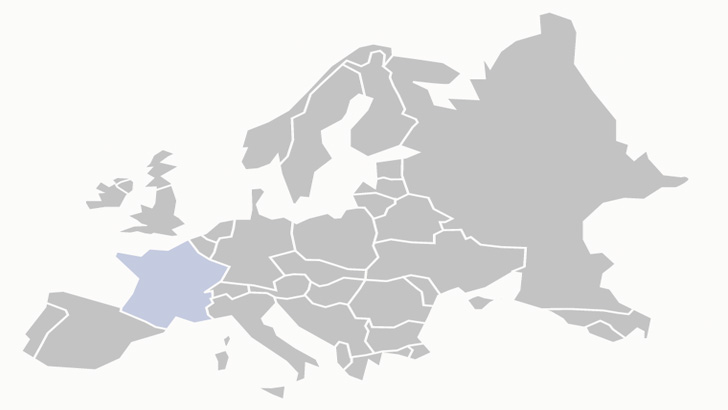
French 2021 Market Roundup
Now that we’ve reached Autumn 2021, it’s hard to believe that France has just had to deal with the greatest economic shock since the end of the Second World War. But good news from the economic frontline has been accumulating for some weeks now, leading us to believe that the worst of the Covid-19 crisis might be over. So, a year and a half after the crisis first hit, it’s time to take stock of the reasons for us to be optimistic, or indeed to be wary. By Benoit Brecq
With the distress caused by the first confinements behind us, the French economy has regained its strength in recent months with many traffic lights turning to go. This is especially the case for GDP; after a lethargic start to the year because of the confinement and subsequent curfew, growth is very much back on. According to the figures published by Insee, French GDP has increased by 3% in the third quarter after a rise of 1.3% in the second. Thanks to these two good quarters, French GDP has just about regained its pre-crisis levels.
Other good news: the unemployment rate is now at a very low level. Insee are saying they expect an unemployment rate of 7.6% at the end of the third quarter, the lowest level since 2008. Protected by partial unemployment during the crisis, and bolstered by the return to business, the French employment market is holding up well.
When it comes to the health of our businesses, the French economic tissue has weathered the storm and insolvencies are scarce for the time being. This good health is of course thanks to the aid allocated to businesses to get through the crisis, which was then extended into the crisis recovery plan. So, as a result there will not be the wave of bankruptcies as we might have expected at the start of the crisis.
Nevertheless, there are some shadows creeping into the picture. Some effects are already being felt while others may have more long-term consequences. The first, more short-term problem, resides in the fact that French businesses sometimes lack manpower which affects activity and therefore recovery. This is the case for certain sectors such as construction, civil engineering, and hospitality.
In addition to the workforce shortages, there are shortages of raw materials as well as all other kinds of materials (wood, steel, aluminium) and unfortunately the boardsports industry is no exception to this.
A lack of products combined with high demand has another consequence – price surges. Insee indicate here that inflation has reached 2.6% in one year. Such a rise hasn’t been seen since 2012. This inflation weighs heavily on some businesses’ margins, bumps up their quotes and puts a strain on household buying power. This was especially obvious in the price of energy, as well as transport, which was pretty spectacular this autumn because of such high global demand.
In the more long-term, the question of public debt – worsened by the aid schemes aimed at countering the crisis – may also prove tricky. According to the latest figures published by Insee, French debt will rise to 114.9% of GDP, 17.4 points more than in the 4th quarter of 2019. This stock of debt could be difficult to reabsorb in the medium-term without affecting growth, and it may prove tough to refinance if interest rates go up. Another debt to keep a close eye on is business debt. Although the loans provided by the State meant they were able to survive the crisis, it also increased their debts. And whether they are repaid or not, this is bound to have consequences on the future, limiting investment capacity in the first case, causing closures in the other.
How has the boardsports market steered itself through all that during 2021? How has it been affected?
The winter season ended quite abruptly mid-way through March. An odd season with no ski lifts, an enduring the health crisis and with lots of snow falling on all the different mountain ranges of France. Mountain businesses drew pretty tepid results. It was a season that could have been excellent; the snow certainly held up its end of the bargain, unlike the year before. But in the midst of an ongoing health crisis, the government chose not to open the ski lifts. Holidaymakers, deprived of downhill winter sports fell back on other activities, which was just not enough to save the season.
But one man’s loss in another man’s gain. It seems as though the whole coastline benefitted from the ski lifts closing in 2020/21. If you look at the results, it was mostly technical equipment that was in high demand this winter: surfboards, neoprene, and skateboards – as symbols of fresh air and freedom – seem to have done the best out of this epidemic. Last winter went rather well for shops on the coast and in the lowlands but the challenge for the summer season ahead seems to already be in stocks and supply, even before winter has started.
Overall, the spring and summer seasons were really good: the populace, seeking open air activities, turned out in their droves. Naturally, in shops visitation numbers and average baskets increased this year. Shop turnover in general improved significantly with increases of +35 or even 50% depending on product category, and this is in spite of the shortages.
Broadly speaking, supply trouble, a lack of merchandise and delivery delays seem to have been the main problems of the 2021 season. This was particularly the case for neoprene, foam boards, skateboards, and accessories due to the lack of raw materials for producing them.
General buying behaviour also seems to have changed with this pandemic: just like in 2020, customers had a big appetite for buying, especially with the heightened interest in surfing and skating. People were moving from the thinking phase to the checkout phase much faster than before the pandemic, even for big ticket items.
So, all the lights seem to have turned green for the launch of the winter season 2021/22. All the frustrated riders from last winter are raring to go, hoping to make the most of the coming season and revisit the spots they might not have seen for a couple of years. The health situation, which has largely improved after the mass vaccination of the French population in the spring and summer (around 87%), is not entirely under control yet. The infection rate is bouncing around like a yoyo in many parts of France and the government are closely watching these fluctuations, continually adapting the restrictions in order to remain effective in the battle again this pandemic.
So unfortunately, not all the clouds have dissipated yet, but you have to admit that the sky is certainly clearer than it was in Spring 2020…