 Pro Content
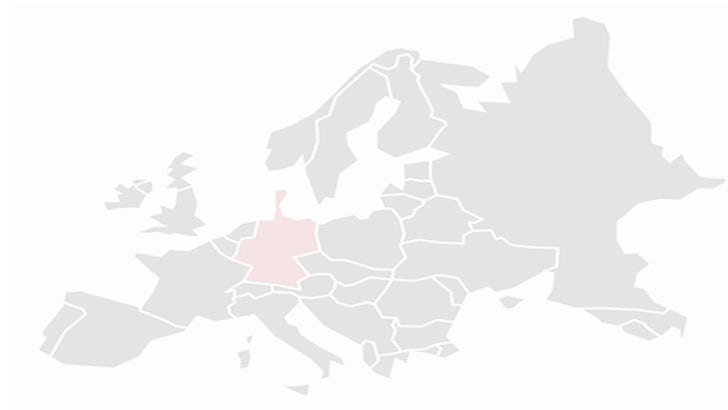
German Boardsports Market Insight 2021
It is March 23rd as we write this. The minister-presidents negotiated well into the night with the Chancellor to come up with a package of measures for Easter in order to contain the new surge in the number of infections. Under the new framework regulation of the federal government, a hard lockdown will be in place over the Easter holidays. By Eric Bruweleit
The easing of some of the restrictions, which had been agreed upon during the last conference with the minister-presidents at the beginning of March, is to be revoked for this period, and the country is to be shut down once again. To date, a matrix for the re-opening of the various sectors has been in place since 8 March as a guideline. Depending on the incidence of Covid-19 cases and on the size of the retail area, shops are allowed to accept a limited number of customers. If the incidence is 50 or more, an appointment is mandatory; from an incidence of 100 new infections per 100,000 inhabitants in a week, an emergency brake is pulled and the opening schedule can then be reversed.
Before the variant B.1.1.7 started to dominate the infection scenario, the plan actually looked different. Vaccines were developed in record time and a nationwide network of vaccination centres was established. A rapid antigen test strategy was implemented, rapid tests to be used by the general public were made available for sale, and vouchers for FFP2 masks were sent to people in need of extra precautionary measures. Companies hit hard by the pandemic were promised financial contributions via the Bridging Aid II and III as well as via the November and December aid. In addition, write-offs under the commercial law were extended to seasonal goods. Positive reports from the business community accompanied this package of measures and brought the first spring feelings after a hard Covid winter. On 16 March, the Federal Statistical Office in Wiesbaden spoke of “the solid start of production-related sectors into the new year”.
However, this sense of optimism did not last long. Vaccine supply shortages, a temporary suspension of vaccinations with Astra-Zeneca, a lack of rapid tests and the spread of viral mutations are forcing the federal State to introduce one package of measures after the other. The brick-and-mortar retail sector is suffering a particularly hard blow. While online sales continue to boom due to the lockdown, in February 2021 sales of textiles, clothing, shoes and leather goods in retail shops plummeted by 76.2% compared to the same month last year (source: Destatis). The Easter lockdown and rising incidence values are getting in the way of a real opening perspective. The sense of unity in the crisis, which politicians have frequently called for, contrasts with a federalism where individual states are going their own way, thus leading to a decline in understanding and acceptance among the population.
An example of this is the situation of the German ski resorts. After the alpine winter sports destinations in the country had already given up on the season, at the beginning of March Winterberg (North Rhine-Westphalia) and Willingen (Hesse) were actually given the go-ahead for limited skiing activities. Up to 2500 day tickets were allowed to be sold daily in the Winterberg ski area through an online booking system. Max Bechen, who runs Stylefish in Winterberg, was completely surprised by the announcement: “Since other ski resorts had already declared the season as concluded, I couldn’t imagine that anything would still happen here!” Although the ski area has been practically fully booked since then, this has hardly made an impact on the shop and the snowboard school. “For the few days left in the season, no customers are stocking up on new products. And our snowboard school is more or less a non-existent advertising factor due to the contact restrictions.” Since Max only took over the shop just before this season, his company cannot report any losses compared to the previous year, and thus, according to him, currently remains ineligible for state subsidies. “Apart from the short-time working allowance, I get exactly 0€ worth of Covid subsidies, because I cannot prove a drop in sales!” The ski area will now possibly have to close again for the Easter lockdown. “For the snowmaking, machine hours and all the staff, the Easter turnover had certainly been factored in! The ski area will now have to cover a lot of the costs,” explains Max. Since only a small amount of goods could be sold this winter, the pre-orders placed with suppliers had to be reduced accordingly: “I had to cut the winter pre-order by about 80% compared to last year!”
A similar view is expressed by Simon Sander of S’Brett in Mannheim: “We have had to cut our orders from our winter suppliers for the coming season by 70-80% compared to the previous year. Overall, we are currently talking about a drop in sales of over 90% for snowboard-specific winter products. Only skateboard hardware has performed well over the winter and has saved our ass a little bit!” Due to the high incidence of cases in the area, Simon was only able to open his shop for one week in March for customers who had booked an appointment. Since then, the shop has been operating on a shoestring via Click & Collect. “We use social media, WhatsApp, landline and emails to provide our customers with advice. What is sold through this system does not even suffice to cover the rent.” Through his tax advisor, Simon has been able to apply for Bridging Aid III. “The first payment is supposed to come in soon, but I’m not sure how much I’ll have to pay back in the summer.” For the aid, upcoming monthly sales have to be estimated, which is not really feasible due to the constantly changing rules for retailers.
Gerd Weisner of GTA Distribution in Frankfurt, on the other hand, sees his business model in a positive light at the moment: “Water sports and roller sports have gone through the roof in the pandemic. Skateboarding in particular, as an individual sport that you can do right on your doorstep. SUP has also performed very well in the winter. People have equipped themselves with wetsuits and want to get out and move around. But also surfing has done well. I’m sure that due to the travel restrictions a lot of new equipment is sitting unused in living rooms at the moment and merely being stroked!” Overall, Gerd reports about 100% increase in surf and skate, which could have been even greater if enough product could have been delivered. “Whether in the USA, Europe or Australia, surf and skate are currently in high demand everywhere! At the same time, production lead times and shipping times have increased considerably, so there are significant delays in delivery.”
The same difficulty is experienced by Benjamin Süß of Wasserski Langenfeld: “Delays are happening everywhere at the moment! And when suppliers can deliver, there are often missing items.” The facilities of Wasserski Langenfeld have already kicked off the new season. “Wakeboarding and our surf wave are up and running now. As for retail, we are only able to operate with restrictions. Our restaurant, however, remains closed for the time being. With regard to the Easter lockdown and for the following period, we are constantly looking out for new rules, virtually every hour,” Benjamin Süß concludes. This is not what planning security looks like.
The coronavirus has been affecting the boardsports industry for over a year now. The segment that has clearly suffered the most is snowboarding. Despite the late opening of ski resorts or individual lifts in the lower mountain ranges, we can speak of an almost complete cancellation of the season here. Due to the travel restrictions, only a few aficionados have crossed the borders to use the lifts in operation. And despite very good snow conditions, the splitboarding segment is still too small to be able to support an entire industry. Watersports and roller sports, on the other hand, are amongst the clear winners. Sales in these sectors were really boosted by the Covid-related restrictions. Retailers who are well positioned in these areas or who can also offer their products online during the lockdown have the best chances of surviving future restrictions and lockdowns.