


Inside Bosiny Surf: The Brand Rethinking Surfboards
Bosiny Surf is a surfboard company focused on sustainable design and material innovation. By combining engineering expertise with environmentally conscious practices, the brand aims to offer performance-driven boards that meet the demands of modern surfers.
Can you give us a brief history of Bosiny Surf?
Bosiny was actually founded on a trip to the bins! My business partner John had just snapped yet another brand-new shortboard at our favourite beach break. That’s when the idea really took hold: there must be a construction that’s durable, lightweight, flexible — and doesn’t cost the Earth. (Pun intended.)
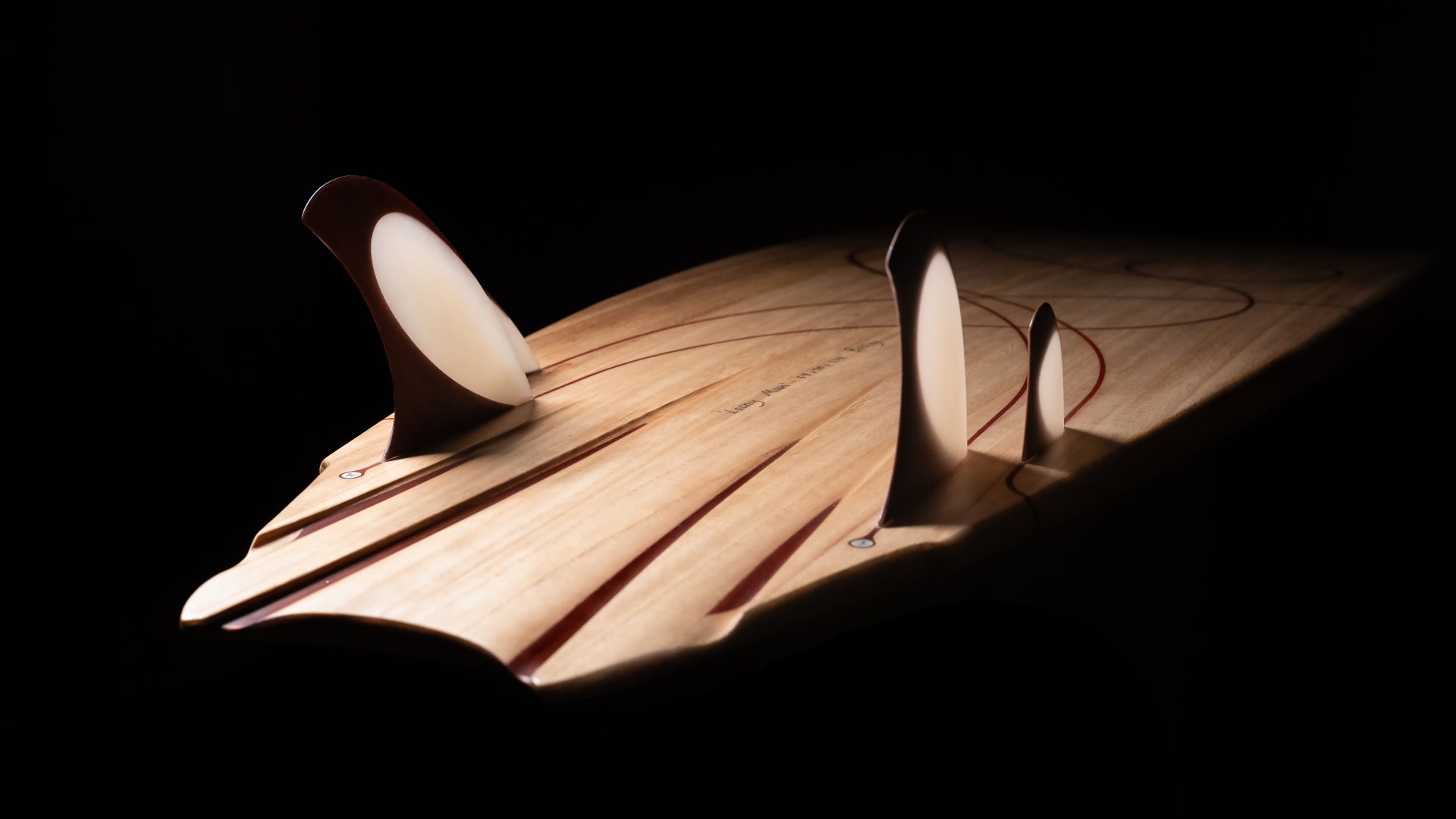
Drawing on a background of material science, engineering, and craftsmanship, we set out to find a better way. Our first construction had real success, but we knew there was room to improve..
That’s where FiberFlex comes in — our soon-to-launch next-generation tech. Our shortboards match premium PU’s in price (€800) weight (2.7kg), and deliver amazing flex dynamics for which we’re seeking patent protection. Furthermore these boards align with our ethos – 98% biodegradable!

How do your boards compare to a more traditional surfboard?
A big bonus is You can’t snap them! At least, we haven’t yet. But honestly, there is a unique magic to surfing on air, wrapped in wood — these materials suit the ocean and offer a deeper connection to the environment. And when you feel good, you surf better! That’s the difference…
What steps do you take to ensure your production methods are eco-friendly?
We start with materials: nearly the whole board is biodegradable and locally sourced where possible — including Paulownia, Cork, Bamboo, and Iroko.
We do use a thin layer of Carbon Kevlar to reinforce the skins – the only synthetic element – but it massively extends the board’s lifespan, which we see as a responsible trade-off. Our previous workshop was fully solar-powered, and we hope to replicate that in our new space. Sustainability is central — from materials to energy supply
What advice would you give to someone trying one of your boards for the first time?
Come to a demo day, surf one, tell us how much you loved it — then buy one! You won’tregret it.
How do you see wooden surfboards fitting into the broader surf industry?
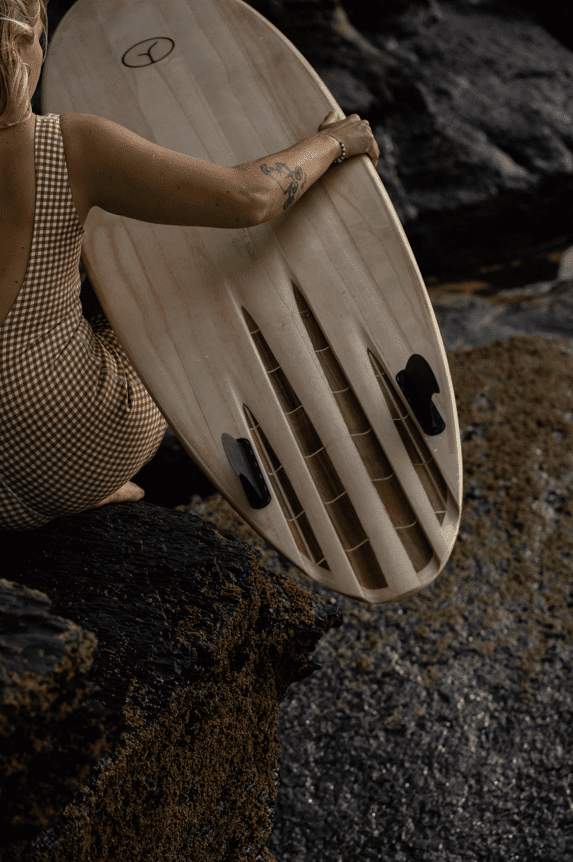
Wooden boards have always appealed to surfers looking for something beautiful and unique, usually attracting a niche customer who’s happy to pay a bit more
Historically, performance has been the limiting factor. But that’s changing. There’s a growing movement to rethink wooden board construction, and some exciting designs are entering the market.
We realised that if we wanted to appeal to the wider industry, then the price, weight, flex – everything — had to match the other boards in the rack. That’s what we’ve done with FiberFlex, and we can’t wait to launch it this autumn!
Have you noticed an increase in people looking to buy eco-friendly products?
Absolutely — the shift is definitely happening. It’s becoming much more prominent in people’s decision-making. But, when it comes to performance, I believe the product has to come without compromise.
Sustainability and performance need to come hand in hand. If we want eco-friendly gear to truly take hold in the mainstream, it has to feel just as good — or better — than what it’s replacing.
How do you distribute the brand across Europe?
Outside of our own platform, we’re about to go live with Boardshop UK, and we’re always looking for new partners and distributors across Europe. Expanding the network is a big part of our focus.
