Brand Profile: Nivia — Redefining Avalanche Safety with the 3D Finder
Nivia is a new brand focused on making mountain sports safer through technology. Its first product, the 3D Finder, is the world’s first avalanche transceiver to use GPS. The device helps rescuers locate buried skiers faster and with greater accuracy.
When did Nivia start developing the 3D finder – and what inspired the idea?
Vogt: Behind the new brand Nivia stands Rosenberger, a world-leading provider of connectivity solutions for high-frequency technology. Co-owner Hans Rosenberger, an avid ski mountaineer himself, was driven by his vision of making winter sports safer. He initiated the idea of bringing avalanche transceivers to a new technological level. The journey of the 3D finder began in 2022. From the very beginning, the Nivia team’s vision has been to enhance mountain safety through modern technology. Leveraging the expertise of a high-tech corporation, we developed an entirely new approach to avalanche transceiver technology and successfully integrate GPS technology into such a device for the first time.
Explain how the 3D finder system works
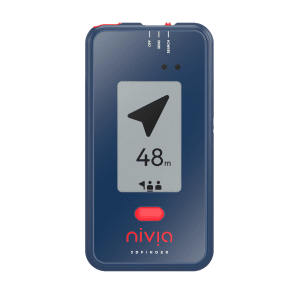
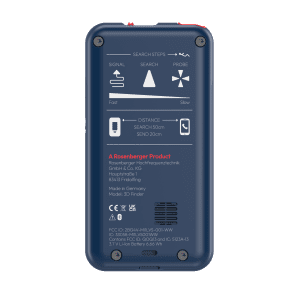
Vogt: Traditional avalanche transceivers operate using antenna technology, where the search is conducted along magnetic field lines. The 3D finder combines this proven technology with its own GPS-based 3D algorithm, which creates an independent coordinate system. This allows the buried person’s position to be pinpointed with centimetre accuracy and shows the direct route to them—without relying on magnetic field lines. From about three meters, the 3D finder assists with guided fine search, indicating the exact burial depth. From a distance of about three meters, the 3D finder guides the fine search, indicating the exact burial depth. Without the need for cross-searching, it leads directly to the probing point, saving valuable time. Probing then serves only to confirm and mark the location. The 3D finder is compatible with all transceivers currently on the market and offers a search strip width of 70 meters.
How does Nivia want to differentiate itself from established players in the avalanche transceiver market?
Vogt: We see ourselves as a technological challenger in an established market. While many brands focus on refining existing systems, we have fundamentally redefined how an avalanche transceiver operates. With the 3D finder, we are introducing a completely new technology.
The 3D Finder is compact enough to fit in a pocket. How did you balance making it small while keeping it durable and long-lasting?
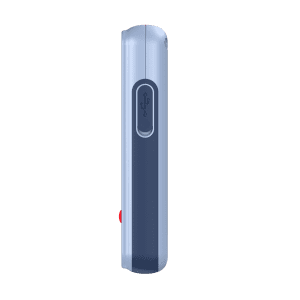
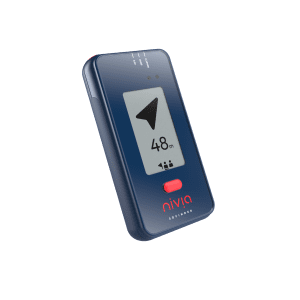
Vogt: In development, equal emphasis was placed on ergonomics and durability. Measuring 67 × 130 × 24 mm and weighing just 225 grams, the 3D finder is compact yet exceptionally robust. Instead of standard batteries, it uses a powerful, cold-resistant lithium-polymer battery that delivers up to 300 hours of runtime. The housing was specially designed for alpine conditions—shock-resistant, temperature-stable, and easy to operate even while wearing gloves.
Who is the 3D finder mainly designed for – professionals, ski guides, or regular backcountry users?
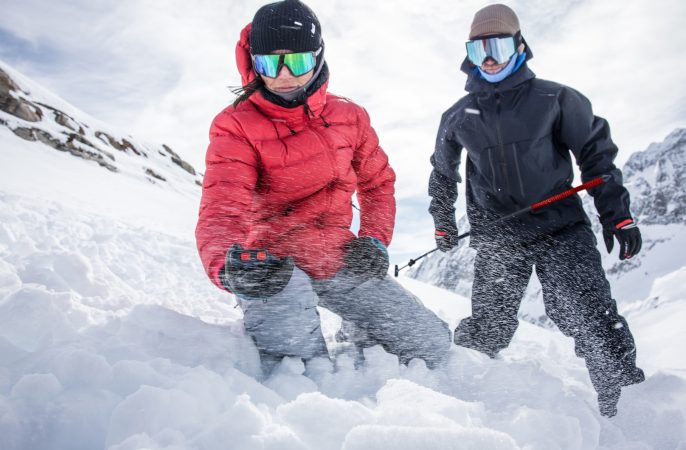
Vogt: The 3D finder is designed for everyone who ventures into alpine terrain in winter—from experienced professionals and classic ski tourers to ambitious freeriders. The device is so intuitive that even less experienced users can operate it safely, while its precision meets the high demands of professional users such as mountain guides and rescue teams. Our goal was to make high-end technology accessible to everyone.
What design choices helped make it so easy to handle in tough conditions?
Vogt: From the very beginning, every design element was tested for usability in real emergencies. The display is the highest-resolution on the market and remains readable even in bright sunlight. Large icons, clear menus, a simple user interface, and a single button ensure that the device can be operated easily – even with gloves or under stress.
 How will Nivia support customers after launch — for example, with updates, repairs, or training?
Vogt: With the market launch in winter 2026/27, our initial focus will be on introducing the 3D finder. At the same time, we will continue expanding the digital ecosystem—particularly the Nivia app, which will include enhanced map functions and safety features. In the long term, our goal remains to continuously improve alpine safety through intelligent technology.
www.nivia.de